
How Many Split Air Conditioners Fit in a 40HQ Container? A Planning Guide for Importers
There is no single loading quantity for every split air conditioner. In the current AMAZ references below, a 12,000 BTU fixed-speed configuration lists 340 complete sets per 40HQ, while a 12,000 BTU inverter configuration lists 315. The difference is a reason to confirm the exact model and packing before budgeting an order. This guide helps importers, wholesalers and distributors use AMAZ air conditioner configuration references to prepare a practical loading request.
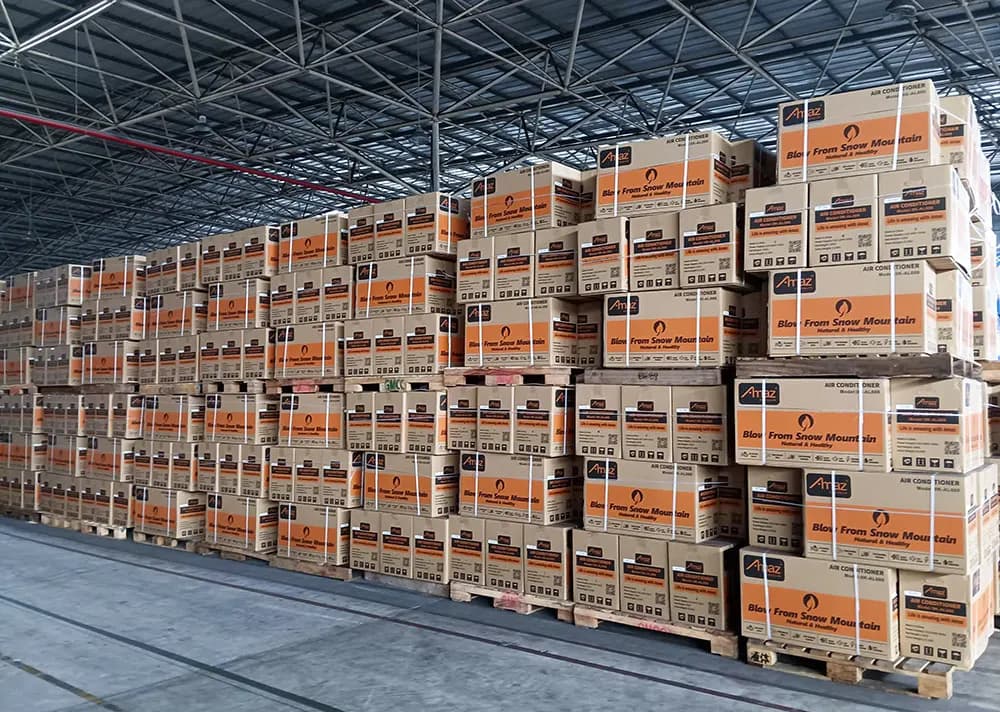
1. Split AC reference quantities per 40HQ
The table compares two specific groups in the current AMAZ product information. The fixed-speed column is for T1, cooling-only configurations for West Africa except Guinea. The inverter column is for cooling-only configurations for West Africa; the source does not assign that group a T1 designation.
Figures are complete sets per 40HQ for each listed configuration, considered separately. They are planning references from the air conditioner product table, not a final packing plan or a guarantee for every order. Reconfirm current carton dimensions, weights, packing method and the proposed equipment before approval.
For example, the listed AL12000A reference is 340 sets and the AL12000C reference is 315 sets. These figures do not mean that every fixed-speed unit loads better than every inverter unit. They describe the particular configurations listed here.
| Capacity | Fixed-speed code | Reference sets / 40HQ | Inverter code | Reference sets / 40HQ |
|---|---|---|---|---|
| 9,000 BTU | AL09000A | 380 | AL09000C | 375 |
| 12,000 BTU | AL12000A | 340 | AL12000C | 315 |
| 18,000 BTU | AL18000A | 270 | AL18000C | 250 |
| 24,000 BTU | AL24000A | 220 | AL24000C | 196 |
2. Count complete sets separately from cartons
Define one complete set by its approved indoor–outdoor unit combination and agreed supply scope. An indoor-unit carton is not another complete air conditioner. Ask the supplier to show complete sets, indoor cartons, outdoor cartons and separately packed accessories or spares as distinct totals.
Check that the carton model identification matches the purchase order and packing list. When multiple capacities or technical variants share a similar appearance, confirm how the cartons will be distinguished and how the matching units will be reconciled during loading and receipt.
Keep the count of sellable sets separate from pallet quantities and loose support materials. If accessories are packed inside the product cartons, identify their location and scope rather than adding them again as separate cartons.
3. Ask which packing assumptions support the quantity
Request the external length, width and height of each packed unit, gross weight per carton, carton count per set and any orientation or stacking restrictions. Confirm whether the proposal assumes floor loading, pallets, extra protective materials or separate accessory cartons. Changes to these assumptions can change the feasible quantity.
Compare the technical configuration as well as nominal BTU capacity. Cabinet sizes, indoor–outdoor pairings and protective packing may differ. The table cannot explain which physical factor accounts for each difference without the corresponding packing specification.
AMAZ exterior-design pages such as AL661 are a starting point for design selection. Request the order-specific mapping to a technical sales code; do not assign a loading quantity to an exterior design simply because it looks similar.
- Approved indoor and outdoor codes and specification revision
- External packed dimensions and gross weights
- Number and type of cartons per complete set
- Floor-loading or pallet arrangement and additional packing
- Order-specific stacking, handling and orientation instructions
4. Treat a mixed-capacity container as a separate loading plan
If the order combines 9,000, 12,000, 18,000 and 24,000 BTU units, send the proposed quantities by exact code. Do not add the full-container reference quantities together or assume that unused space for one carton shape will accommodate another shape.
Ask for a revised layout that accounts for both indoor and outdoor cartons, accessories, packing materials, door access and the applicable weight limits. Request confirmation of any loading sequence needed to maintain the pairing and identify mixed models at unloading.
If the proposed mix does not fit, ask for alternatives showing the revised quantity of each code, complete-set total and remaining goods. Decide which capacities to prioritise using your purchasing plan, then approve the revised packing list and loading arrangement together.
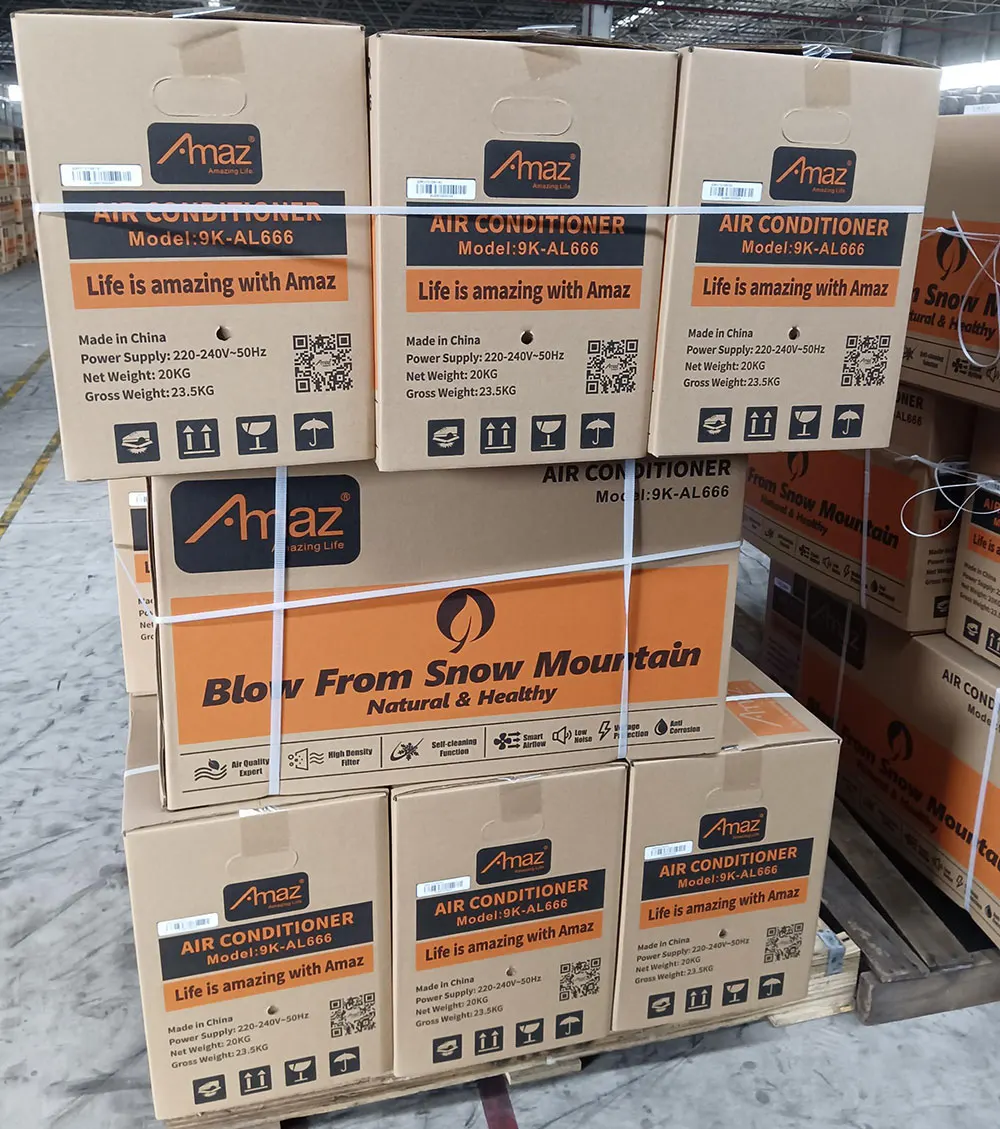
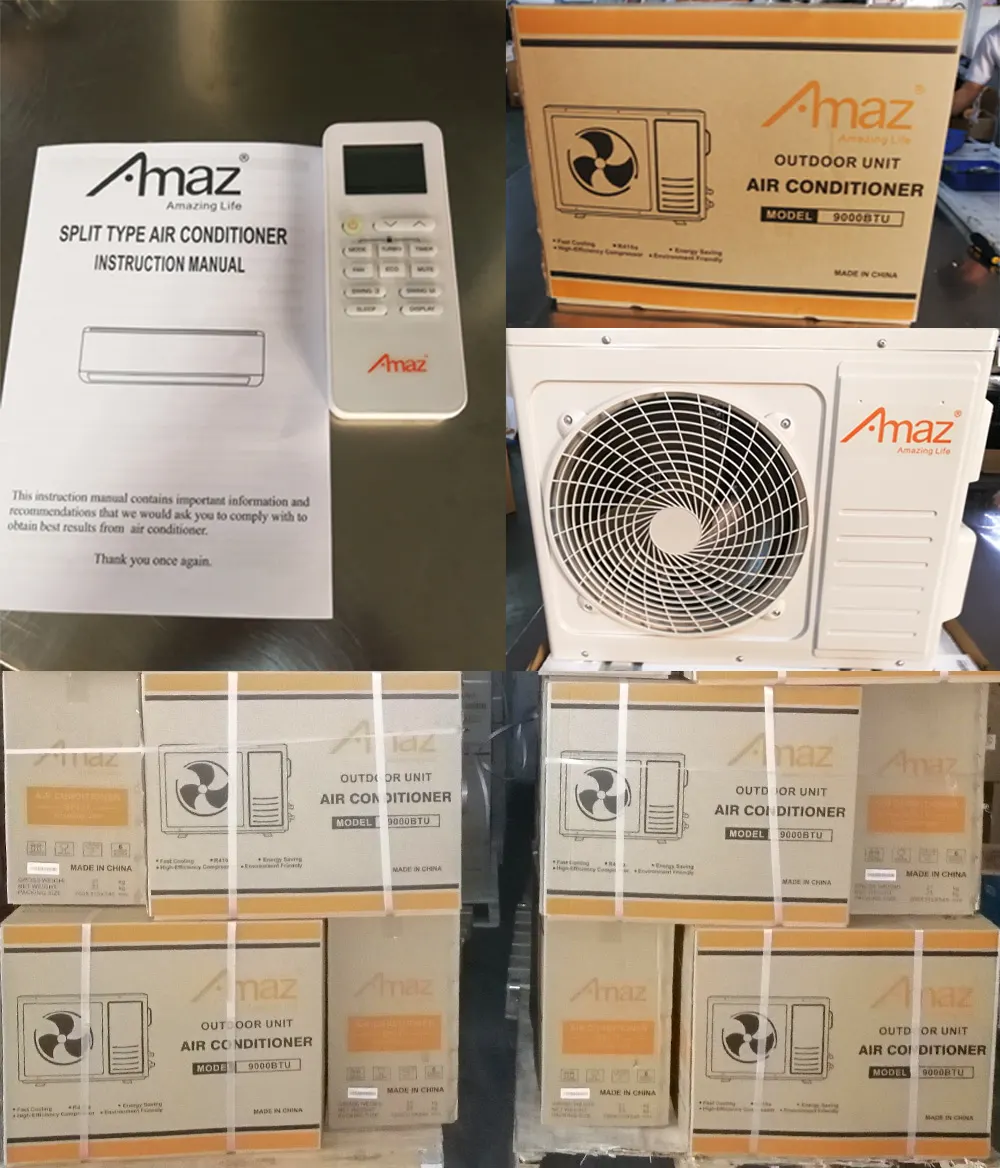
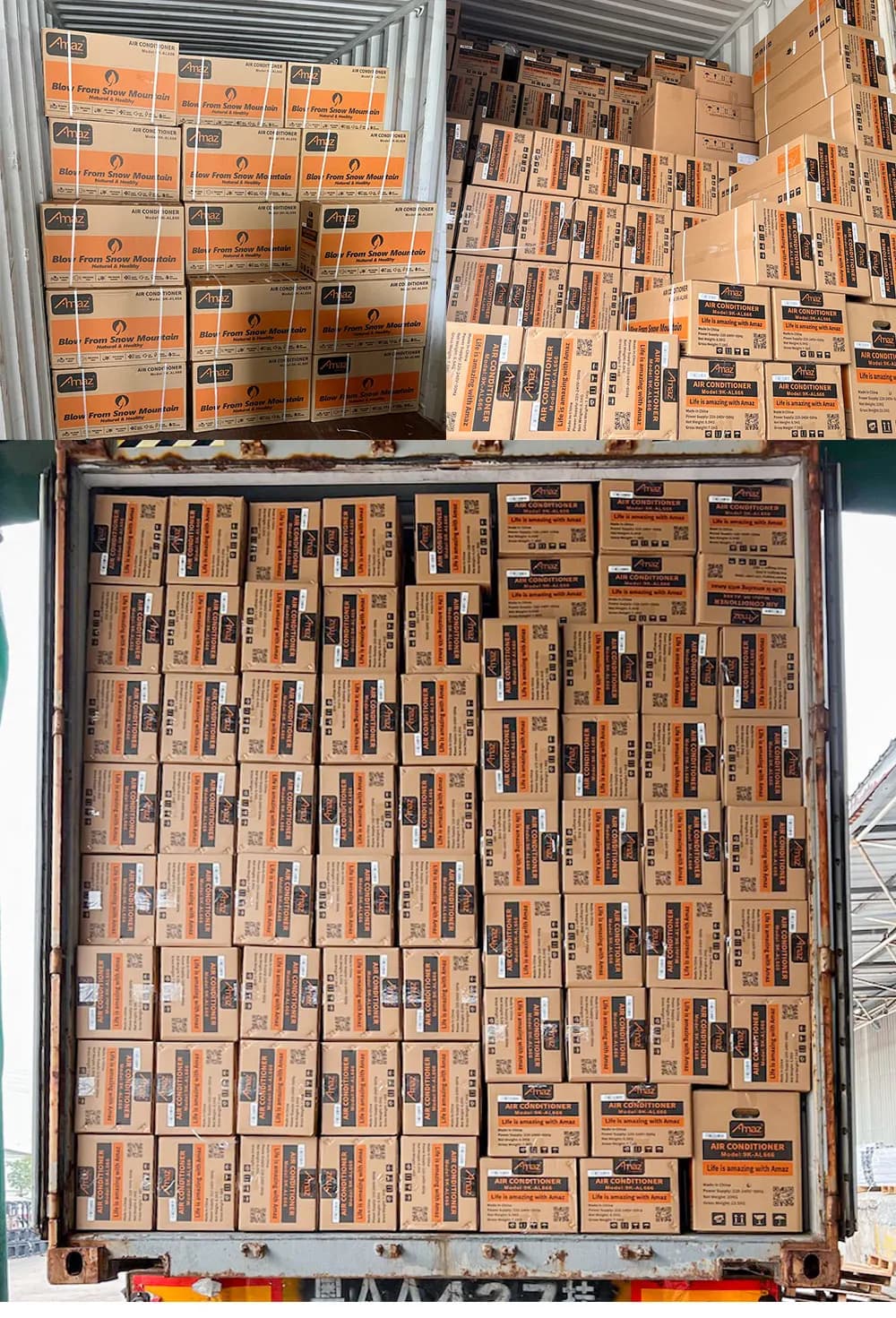
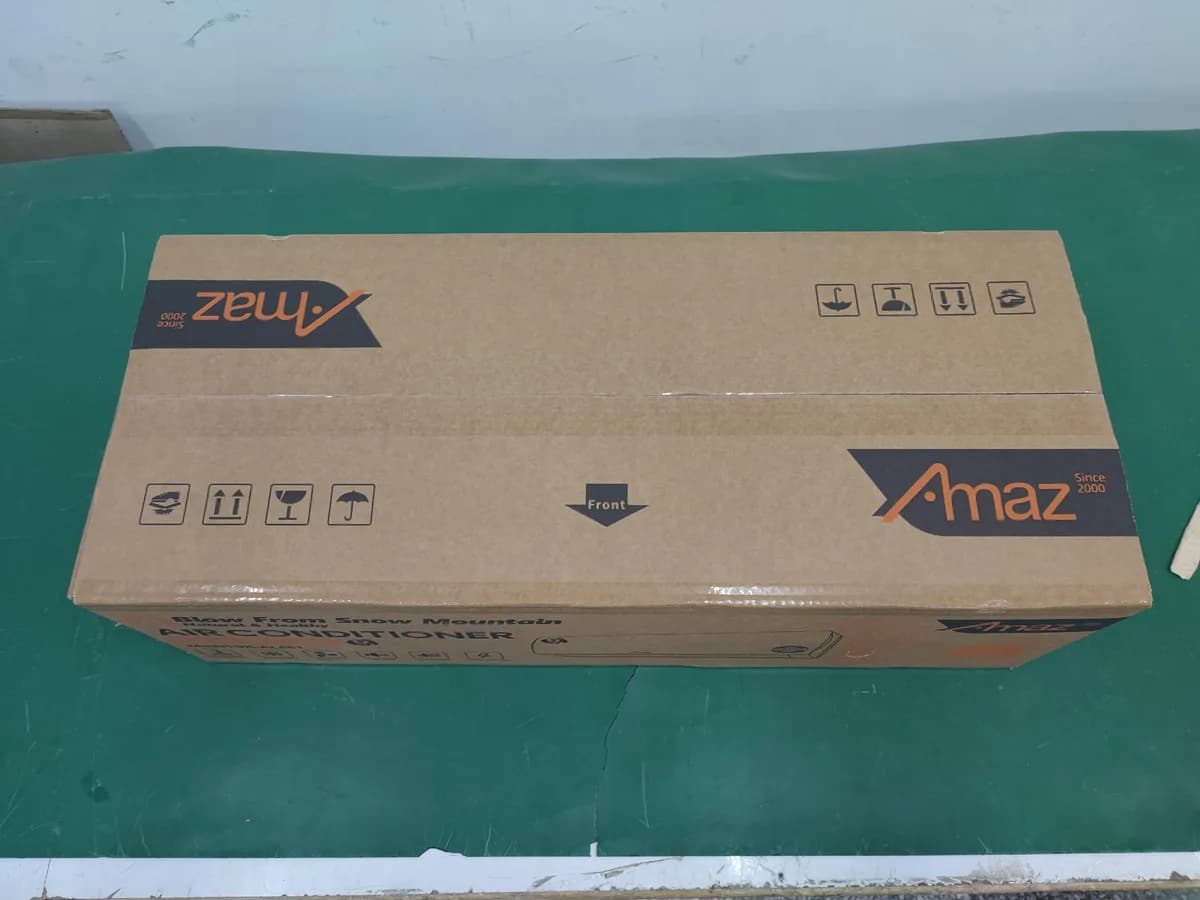
The photographs in this article are supplied inspection and packing references. They do not establish the container type, total number of sets, exact technical mix or suitability of a loading arrangement for your shipment.
5. Compare freight allocation per set on a consistent basis
For a shipment containing one configuration, a simple planning calculation is agreed shipment freight divided by confirmed complete sets. Keep the freight scope, route, equipment and quotation validity the same when comparing proposals. No freight price is assumed in this guide.
For a mixed shipment, agree how freight will be allocated between capacities or product codes. A single average per set can conceal differences in packed volume and weight. State the allocation basis in your cost worksheet.
Freight allocation alone is not the full landed cost. List product value, freight and other applicable charges separately, and obtain destination-specific information from the responsible service providers. A higher loading count does not by itself establish the most suitable product or the lowest total cost.
6. Check the actual container and loading responsibilities
Use Hapag-Lloyd’s 40-foot high-cube equipment reference as background; it notes that container specifications vary. Confirm the equipment assigned to the shipment.
Ask the loader and forwarder to check internal space, door clearance, payload and the applicable transport constraints against the packed goods. Dividing nominal container volume by carton volume does not verify that a real arrangement will fit or be suitable for transport.
Use the IMO/ILO/UNECE CTU Code overview as background when discussing packing responsibilities with your loading provider.
Agree who prepares and approves the plan, who checks the equipment and who records loading. Ask qualified providers to resolve cargo-specific securing and handling requirements. A photograph of cartons inside a container is not a substitute for that review.
7. Reconcile the documents before shipment release
Compare the approved purchase order, final packing list and loading record by code and unit type. Reconcile indoor units, outdoor units, complete sets and separately packed items. Record substitutions, shortfalls or packing changes before release, with an agreed decision for each discrepancy.
Use the air conditioner pre-shipment inspection checklist for the broader inspection scope. Here, the priority is consistency between the quantity being purchased, the goods packed and the final loading record.
Request legible carton and shipping marks, loading photographs and the container and seal references where included in the agreed scope. Photos should support the records; they do not independently prove every quantity, performance result or shipment condition.
8. What to send with a 40HQ split AC enquiry
Use the split AC sourcing checklist to define the product first. Then ask for a loading proposal linked to the same specification and quote revision.
Send your destination, capacity mix and preferred configuration. Ask the supplier to distinguish confirmed quantities from provisional estimates and state which packing details still require confirmation. This makes it easier to compare alternatives and resolve missing information before placing the order.
- Destination country, delivery port and requested trade terms
- Exact technical codes or the specifications to be confirmed
- Quantity by capacity, control type and operating mode
- Single-configuration or mixed-capacity container preference
- Accessory, spare-parts, branding and carton-marking scope
- Packing method and required loading or inspection records
- Requested delivery schedule and quotation validity
Discuss your split AC loading plan with AMAZ
Review the air conditioner range and product catalogues. Use the reference table to start the discussion, then request the current specification and packing details for your selected combination.
Send your destination, model mix and estimated order quantity to AMAZ. Ask for a current quotation and a shipment-specific loading proposal before confirming the order.
Split AC container-loading questions
How many 12,000 BTU split AC sets fit in a 40HQ?
The listed AL12000A fixed-speed reference is 340 complete sets; AL12000C inverter is 315. These figures apply to the specific groups described above. Confirm the current packing and final loading plan.
Does one carton equal one complete split air conditioner?
No. Define the approved indoor–outdoor pair and supply scope. Count complete sets separately from indoor cartons, outdoor cartons and separately packed items.
Can I mix capacities in one 40HQ?
Request a proposal using exact codes and quantities. The supplier and loader need to confirm the combined layout, packing, weights and complete-set totals.
Does changing the packing affect loading quantity?
It can. Reconfirm the quantity when carton sizes, pallets, protection, accessories or handling restrictions change.
Can I calculate loading quantity from total CBM alone?
CBM is a planning input. Carton geometry, orientation, door clearance, packing and weight limits also need review for the actual equipment.
What should I provide for a loading quotation?
Send the destination, technical configurations, quantity by code, packing and accessory scope, requested terms and schedule. Ask for a current quote and an order-specific loading proposal.