
Air Conditioner Pre-Shipment Inspection Checklist for Importers
A split air conditioner order is ready for review when the buyer can connect the purchase specification to the actual units, cartons and inspection records. This air conditioner pre-shipment inspection checklist helps importers and distributors organise those checks before shipment release. Start with the agreed configuration in the split AC sourcing checklist, then use the steps below to record what was checked, what was found and what remains to be resolved.
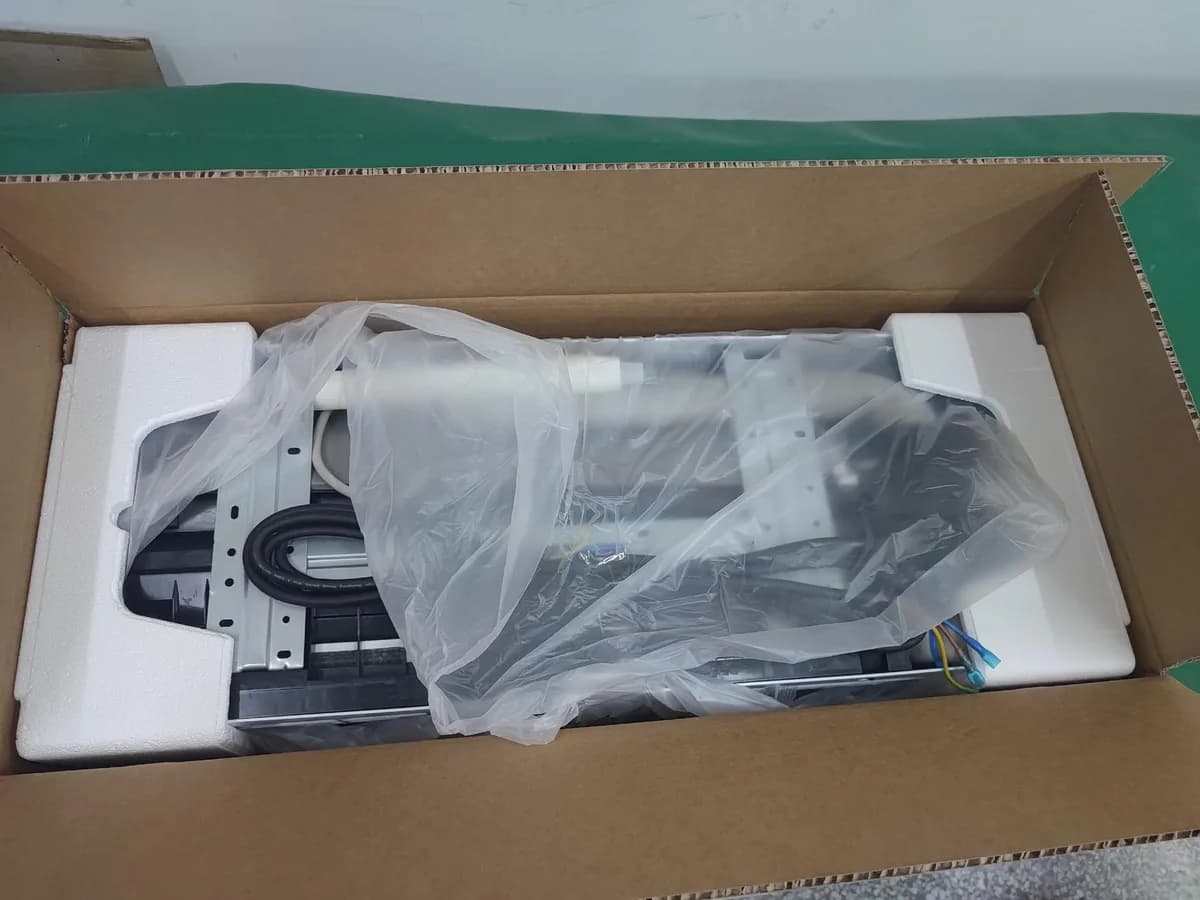
1. Agree on the AC inspection scope, lot and sampling plan
Before booking an inspection, send the purchase order, approved specification revision, indoor–outdoor pairing list, sample approval record, artwork, accessory list and packing instructions. Give the inspector the same references that production is expected to follow.
Confirm how much of the order is finished and packed, which lots and models are available, and whether operating checks can be performed with the necessary equipment. Ask the inspection provider to confirm readiness requirements before the visit.
For a final random inspection, agree the lot definition, sampling method, inspection level, defect classes and acceptance limits in writing. If an AQL sampling plan is used, have a qualified inspector choose the applicable plan. There is no single sample size or AQL setting suitable for every AC order; sampling does not establish that every unit is defect-free.
For background on the distinction between production inspections and final random inspections, see Intertek’s appliance inspection overview. Agree the actual service scope with your chosen provider.
- Purchase order and dated specification
- Lot size and quantity by configuration
- Approved reference sample and artwork
- Required checks, equipment and records
- Defect definitions and acceptance decision
- Responsible person for hold, reinspection and release
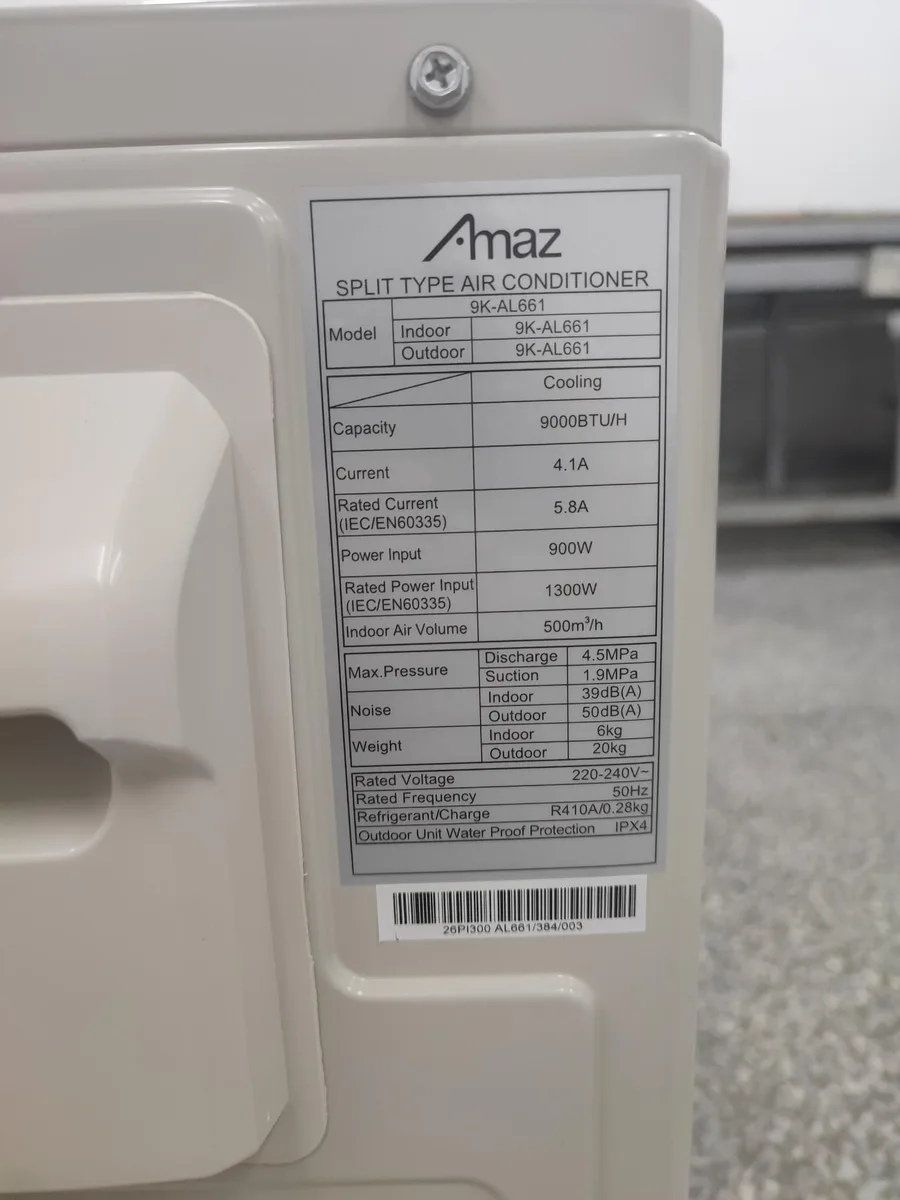
2. Verify indoor–outdoor unit pairing and rating labels
Match the model on the indoor unit, outdoor unit and cartons to the approved combination. A shared exterior design does not prove that two units belong to the same technical configuration. Resolve different model codes or label revisions before accepting the set.
Check legibility and agreement with the approved label artwork: model, electrical ratings, refrigerant information, required languages and traceability identifiers where applicable. Record the unit and carton references used in the report so a finding can be traced to the inspected item.
Treat label review and document verification as separate tasks. A standard number, protection marking or energy claim printed on a sample is not, by itself, evidence of certification or destination-market acceptance.
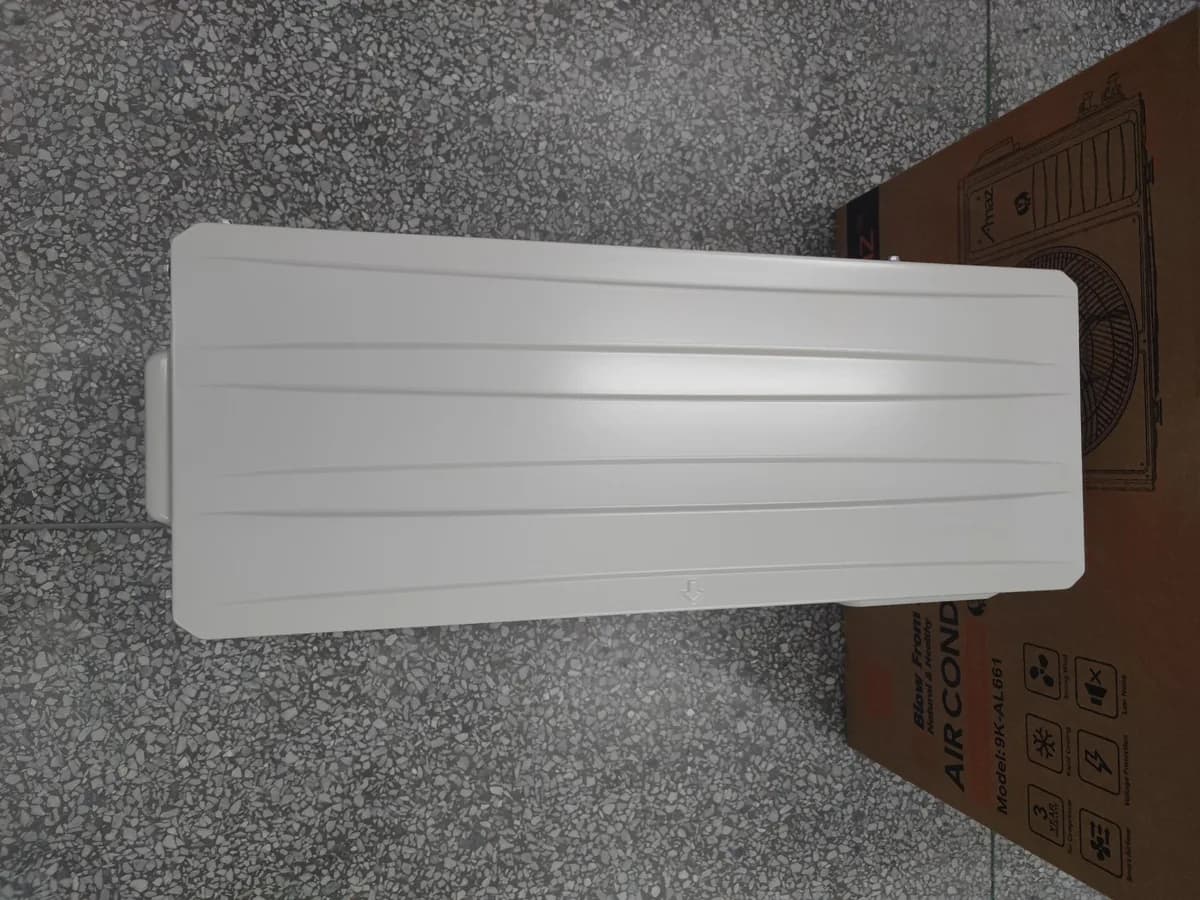
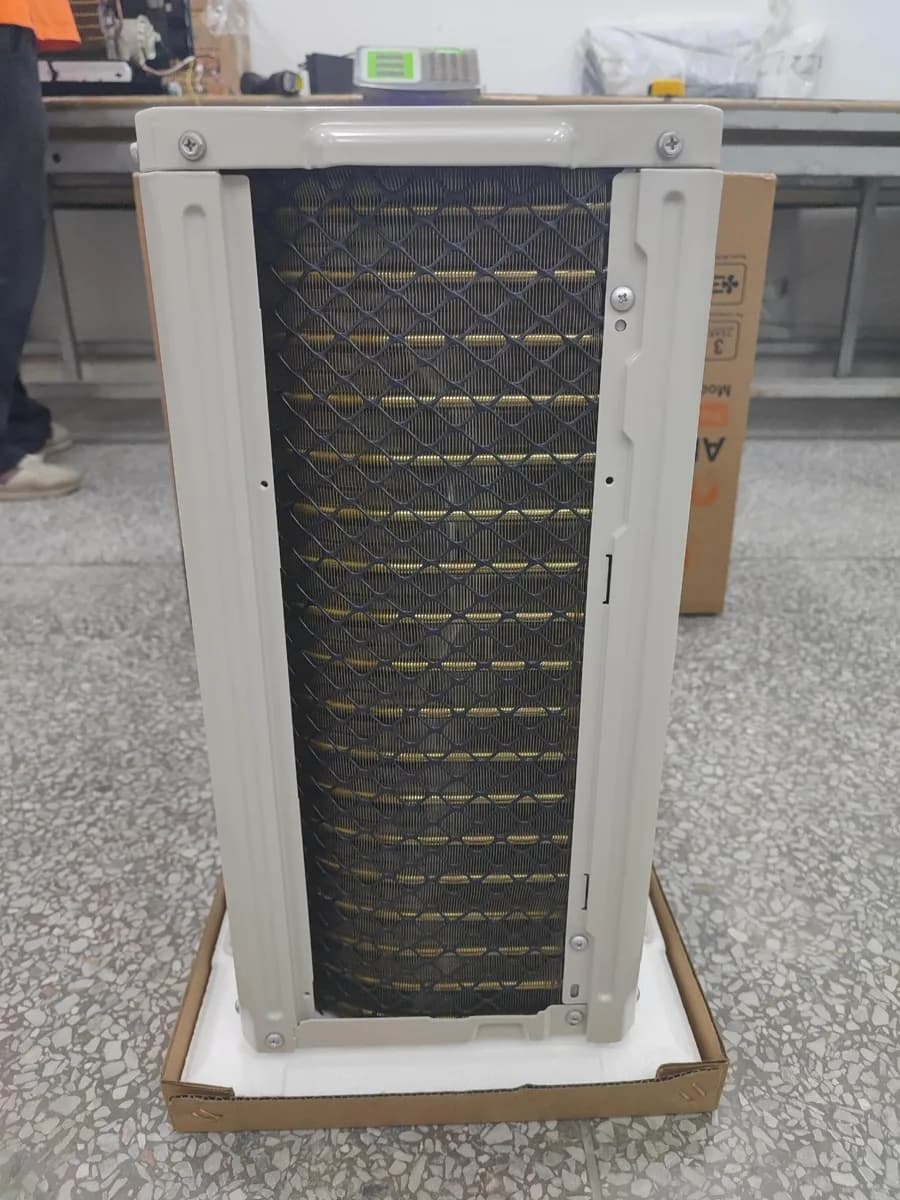
3. Record indoor and outdoor unit workmanship
Inspect visible surfaces under suitable lighting and compare them with the agreed appearance standard. Record location, extent and quantity of scratches, dents, panel gaps, loose parts or damaged packaging. Use both an overall photo and a close-up for any finding.
For outdoor units, include the cabinet, grille, accessible coil surfaces and visible pipework in the agreed visual review. Photograph damage for assessment instead of treating every mark as either harmless or an automatic rejection.
An image of one sample documents that item only. It does not establish the condition of the complete shipment, the inspection coverage or the result of an unrecorded test.
- Cabinet finish and panel fit
- Grille and visible coil condition
- Fasteners and accessible parts
- Logo and display-window appearance
- Comparison with approved reference and defect limits
4. Define functional checks and electrical safety evidence
Agree which functions must be demonstrated for the quoted configuration: start and stop, supported modes, fan settings, display, remote response, restart behaviour and optional features when included. The presence of a button on a remote does not confirm that the unit supports that function.
Functional checks, electrical safety tests and laboratory performance testing answer different questions. Specify which checks are performed on site, which records are reviewed, and which require a suitably equipped laboratory or inspection provider.
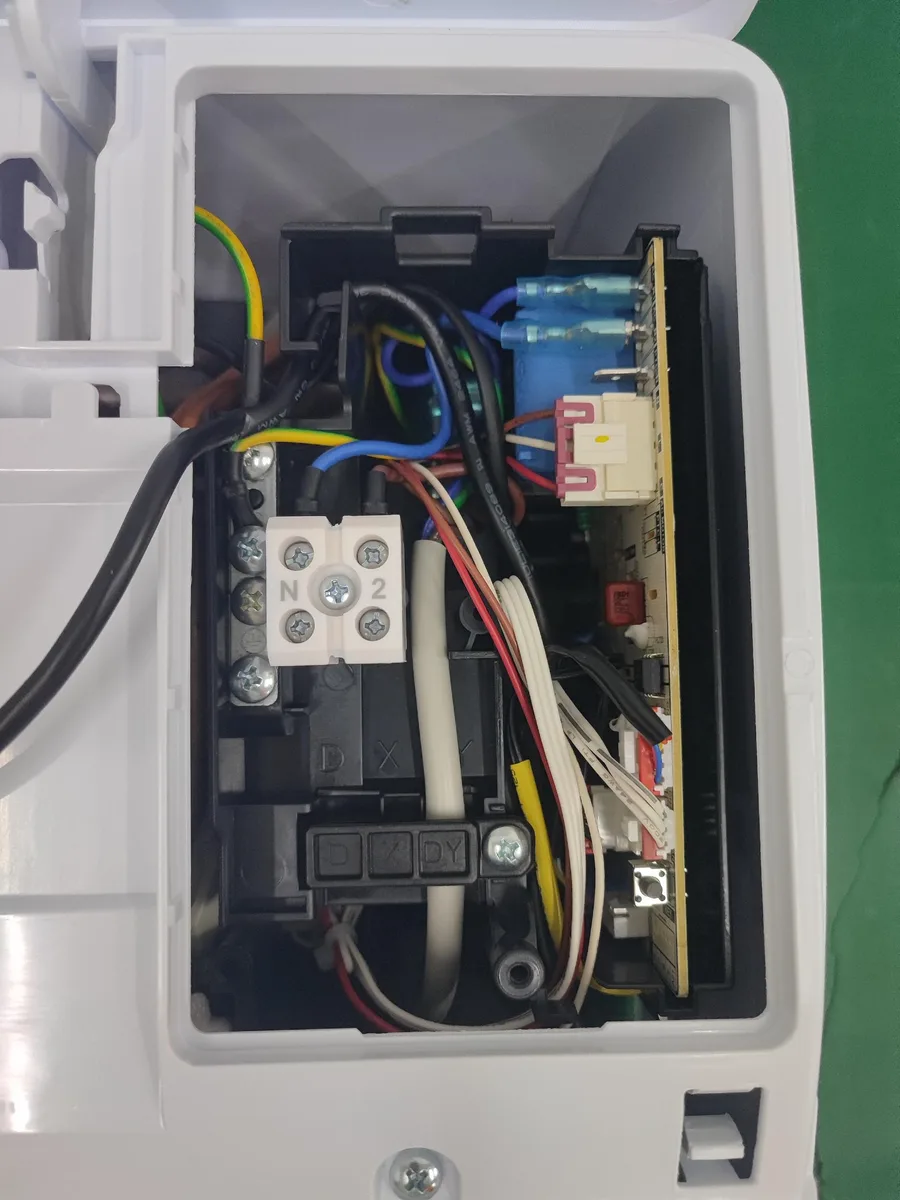
Installation, live electrical work, opening electrical compartments and refrigerant-related work belong to qualified personnel following the applicable instructions. This checklist does not set wiring procedures, test voltages, running times or pass limits.
Record the tested unit pair, supply conditions, operating mode, instruments, method, duration and result against the agreed criteria. A photograph of a temperature or power display alone cannot establish cooling capacity, efficiency or a completed safety test.
5. Count accessories and verify installation-kit measurements
Compare the contents of each sampled set with the approved packing list. Check the remote, manual, supplied cables and any installation materials item by item. Mark optional or excluded items explicitly; a catalogue image does not make them part of the order.
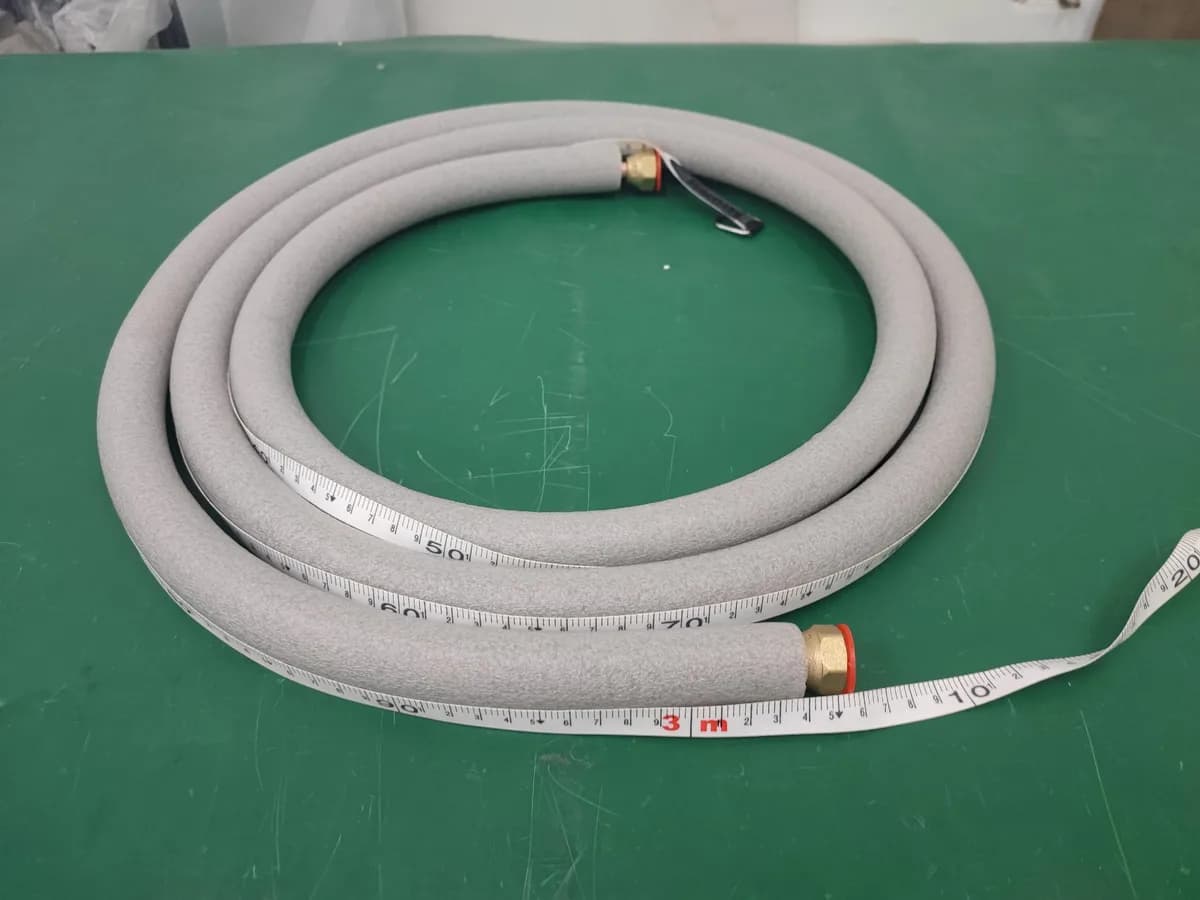
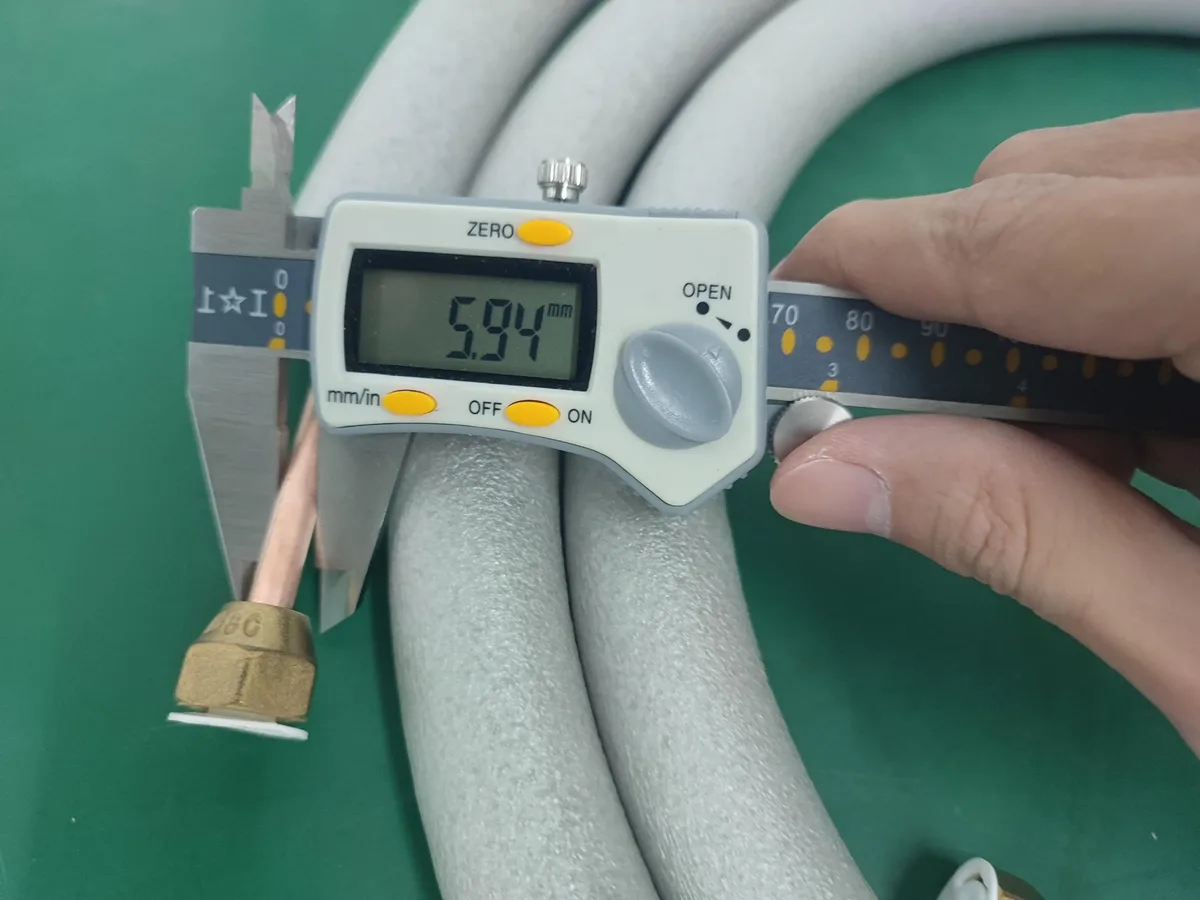
Where a pipe kit is included, agree the specified material, length, dimensions, insulation, fittings and quantity. Record measurements using an agreed method and suitable instruments. A length check and a dimension check should have separate records.
Do not infer pipe material, wall thickness or acceptance from a photograph of a caliper. Identify what dimension was measured, where it was measured, the instrument status and the specified tolerance. Confirm manual languages and accessory placement before repacking.
6. Check export packing, carton marks and shipping labels
Review both indoor and outdoor packing against the approved arrangement. Check protective bags, end supports, accessory restraint, carton fit, sealing and the condition of the sampled cartons. Confirm that repacking after inspection follows the same arrangement.
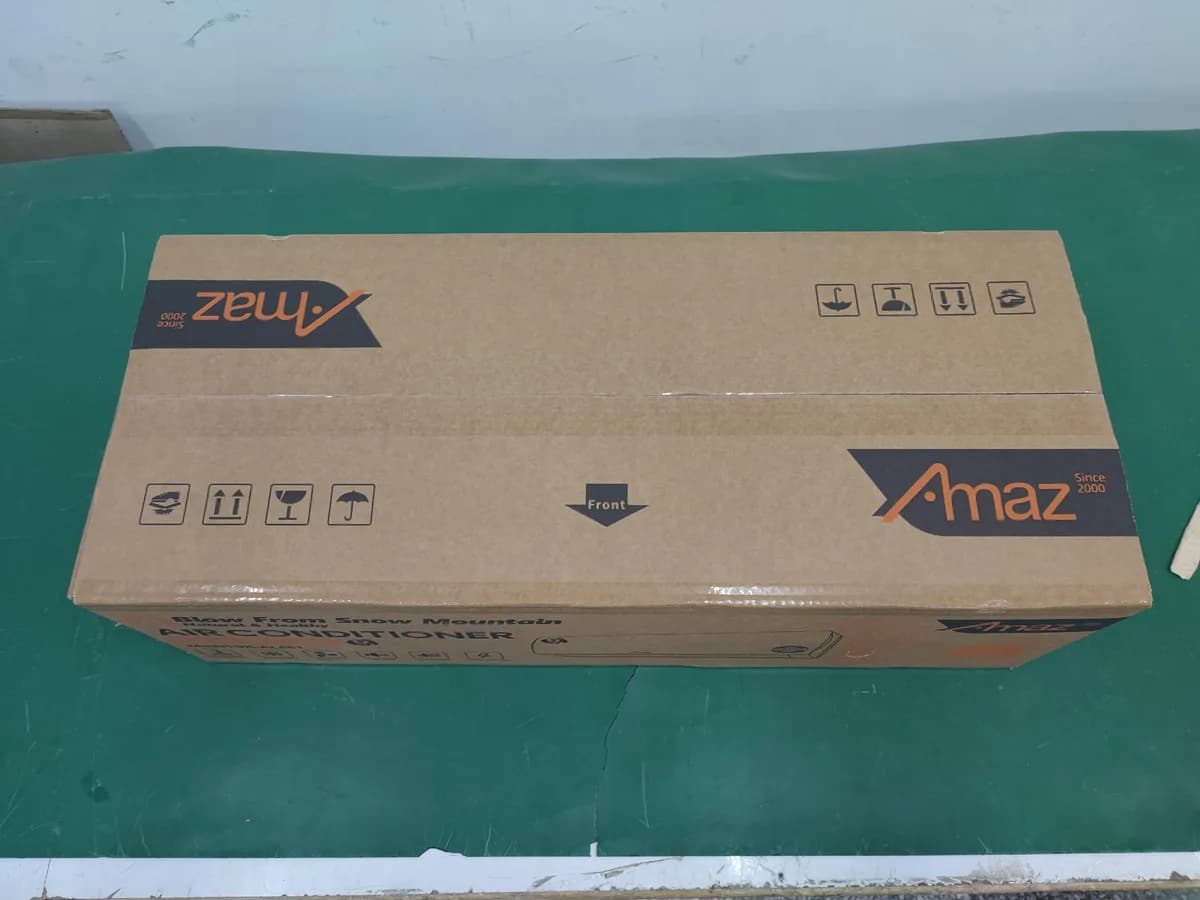
Compare carton model identifiers, shipping marks, barcodes where required, handling symbols, box counts, measured dimensions and gross weights with the approved artwork and packing list. Record indoor and outdoor cartons separately.
A packaging photograph records the arrangement shown. It does not prove drop-test or transport-test performance. If such tests are required, agree the method, sample, acceptance criteria and responsibility in advance.
7. Reconcile quantity, documents and shipment traceability
Reconcile purchase quantity, finished quantity, packed quantity and inspected quantity by model and configuration. Keep sets, individual units, cartons and pallets as separate counting fields. Explain shortages, replacements and unavailable lots.
Review the model-specific document verification checklist when matching available reports to the units being supplied. Verify holder, manufacturer, model scope, dates and issue status; do not extend one model’s report to the entire range.
Link every finding to a unit or carton reference. Store the dated specification, sampling record, measurement results, photos, defect list and inspector’s conclusion together so a later claim can refer to the same evidence.
8. Close defects and authorise shipment release in writing
Classify findings under the agreed defect definitions. For each issue, record the affected item, requirement, observed condition, quantity, corrective action and responsible person. Separate measured results from the factory’s proposed explanation.
If a required check cannot be performed, record it as not performed rather than passed. Where the evidence or an agreed acceptance criterion is missing, obtain a documented decision before release.
Agree how corrected goods will be segregated and rechecked, whether reinspection is required, who bears agreed costs and who has release authority. A completed corrective-action promise is not the same as evidence that the correction has been verified.
Keep the inspector’s report and the buyer’s shipment decision separate. A passing sampled inspection does not replace contractual obligations or model- and market-specific compliance review.
9. Keep container loading supervision separate from product inspection
Before loading, reconcile the released packing list with the goods presented. Where loading supervision is commissioned, define the checks for container condition, quantity, handling, stowage, securing and seal records with the responsible provider.
SGS describes packing, marking and loading verification as possible elements of its inspection services. Their inclusion in your order must be agreed; a product-inspection report does not automatically include loading supervision.
Retain loading photographs, carton counts, container and seal identifiers, and any exceptions under the shipment reference. Warehouse photographs alone do not prove that the released goods were loaded into a particular container.
Air conditioner quality-control report: a buyer’s evidence checklist
Use this table to request an inspection report that supports an actual purchasing decision. Ask for missing records before treating a checklist as complete.
| Checkpoint | Evidence to retain |
|---|---|
| Order reference | Purchase order, model mix and specification revision |
| Sampling | Lot definition, selection method, sample size and acceptance plan |
| Unit identity | Indoor–outdoor pairing and unit/carton identifiers |
| Workmanship | Defect locations, counts, overview and close-up images |
| Function and safety scope | Methods, conditions, results and checks not performed |
| Accessories | Itemised contents, measured dimensions and stated tolerances |
| Export packing | Protective arrangement, marks, counts, dimensions and weights |
| Documents | Model scope, issue status and unresolved requirements |
| Corrective action | Owner, completion evidence and reinspection result |
| Release and loading | Written release decision and loading records if commissioned |
Prepare your split AC order and inspection brief with AMAZ
Review the AMAZ air conditioner range or the AL661 design reference and use the sourcing checklist to define the configuration before agreeing inspection details.
Send your destination country, model and capacity mix, estimated quantity, document requirements and proposed inspection arrangements. Contact AMAZ to discuss your air conditioner sourcing requirements. Available records, responsibilities and commercial terms are confirmed for the selected order.
Air conditioner pre-shipment inspection questions
What should a split AC pre-shipment inspection cover?
Agree coverage for order identity, unit pairing, quantity, workmanship, functional checks, accessories, packing, documents and defect closure. Loading supervision is included only when separately agreed.
What sample size or AQL should I use for an AC order?
Define the lot, inspection level, defect classes and acceptance limits with a qualified inspector. No single sample size or AQL setting applies to every order.
Can inspection photos prove cooling capacity or energy efficiency?
No. Performance conclusions require the relevant method, conditions and recorded results. A photograph of an instrument display is not a complete test report.
Should the inspector check both indoor and outdoor units?
The scope should identify the approved unit pair and which checks apply to each unit, its accessories and its packaging.
What should I do if the inspection fails or a test is missing?
Record the issue, agree corrective action and any reinspection, and obtain a written release decision. A check that was not performed should not be recorded as passed.
Does a passed inspection replace product certification?
No. Inspection acceptance and model-specific destination-market documentation are separate requirements.