
Inverter vs Non-Inverter Air Conditioners: A Buying Guide for Importers
An importer choosing between inverter and non-inverter air conditioners is choosing a product configuration, a customer proposition and a support commitment. The useful question is which documented configuration fits the intended market and order. This guide explains how to compare inverter vs fixed-speed AC, prepare equivalent quotations and decide whether to stock one type or a mixed range. Start with the AMAZ air conditioner range, then confirm the technical specification for the exact indoor–outdoor combination.
1. Inverter vs non-inverter AC: the basic difference
An inverter system varies compressor speed with demand. A conventional fixed-speed system cycles its compressor on and off. See the PNNL overview of variable-speed and single-stage systems for the technical background.
For purchasing, keep this description separate from the model’s actual performance. “Inverter” does not identify the cooling capacity, heating function, climate rating, voltage range or approved accessory package. “Non-inverter” is commonly used for fixed-speed configurations, but the quotation should state the control type explicitly.
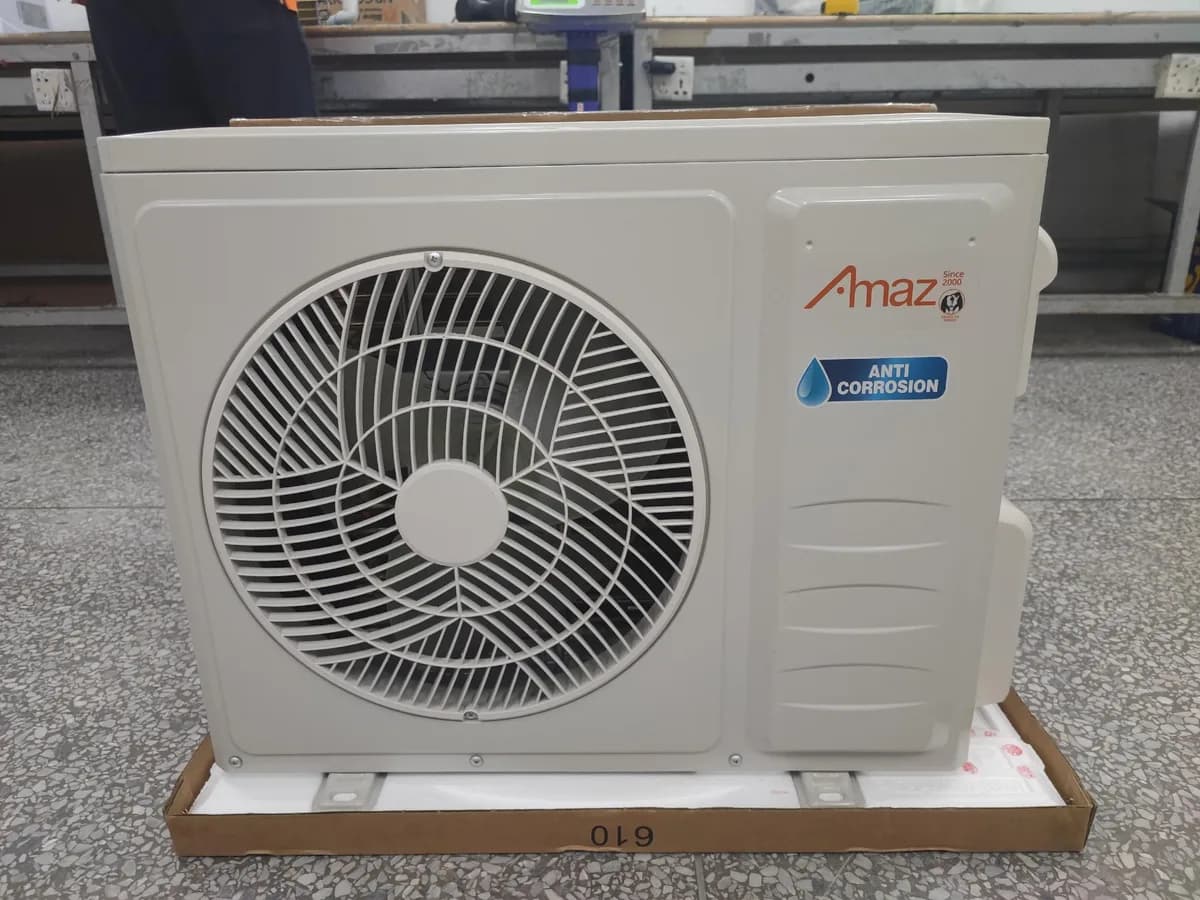
The indoor panel is an appearance choice. Do not classify a set as inverter or fixed-speed from its cabinet, colour, remote buttons or a catalogue picture alone. Match the exterior design to a confirmed technical configuration and unit pair.
2. A procurement comparison table for equivalent split AC offers
Use this table to organise two offers against the same requirement. The last column is the evidence to request before deciding; neither category receives an automatic quality or suitability rating.
| Comparison point | Inverter offer | Fixed-speed offer | Buyer verification |
|---|---|---|---|
| Compressor control | Variable-speed configuration | On/off configuration | Exact technical model and matched unit pair |
| Capacity and climate | Confirm selected capacity and conditions | Confirm the same capacity and conditions | Comparable rated data, climate class and operating range |
| Efficiency and energy claims | Request model-specific evidence | Request equivalent evidence | Metric, test method, conditions and report model scope |
| Electrical supply | Confirm rated and permitted supply | Confirm rated and permitted supply | Frequency, input ratings, voltage limits and installation instructions |
| Functions and controls | List included functions and remote | List included functions and remote | Heating, Wi-Fi and other options confirmed individually |
| Support and parts | Identify matching control and spare-part references | Identify matching control and spare-part references | Written parts scope, documentation and support responsibilities |
| Order cost | Itemised scope and commercial terms | The same itemised scope and terms | Packing, accessories, freight basis and document scope |
3. Match the market, climate and electrical requirements first
Define the destination country, sales channel, capacity mix and whether buyers need cooling only or both cooling and heating. Request the relevant climate class, rated test conditions and operating-temperature limits for each proposed set. T1 or T3 classification and inverter control are separate specification fields; verify both.
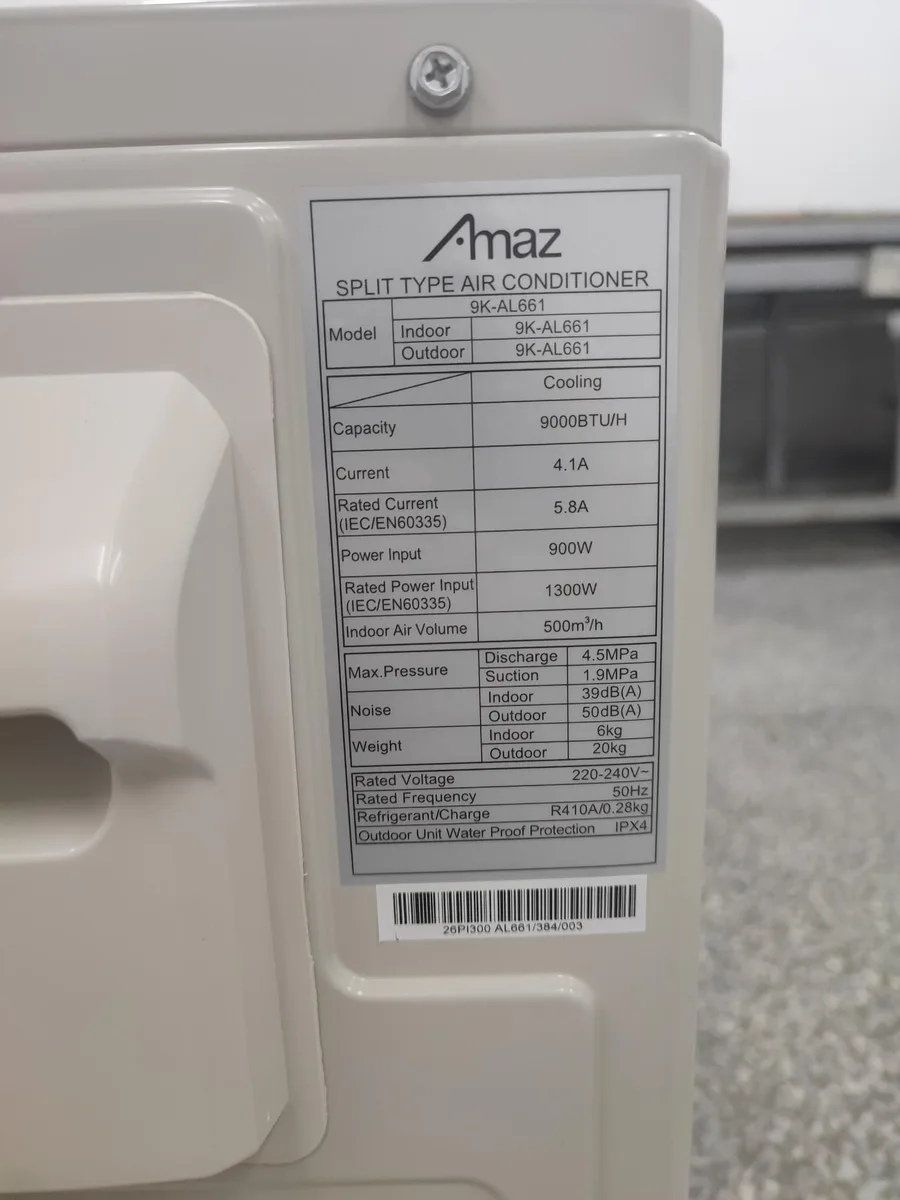
Confirm voltage, frequency, rated inputs and the permitted supply range in the technical documents. An inverter description is not a promise of protection from unstable electricity or compatibility with a generator. If backup power matters, provide the proposed supply details and request written compatibility conditions for the exact configuration.
Check the model references across the quotation, indoor and outdoor labels, datasheet and available reports. In the current AMAZ range, exterior design codes and technical sales configurations are presented separately. Confirm their mapping for the order instead of assigning every technical option to every panel.
4. Compare efficiency and comfort using evidence, not a fixed saving claim
The Australian Government’s air-conditioning guidance notes that inverter technology can reduce running costs, particularly with longer operating periods. It does not establish a saving for a particular AMAZ model or market.
Ask for the efficiency metric required by the destination market, the test method, conditions and exact models covered. Keep rated input power, cooling capacity, seasonal efficiency and measured consumption as separate fields. Compare figures only when their measurement basis is compatible.
If customers ask about operating cost, agree the usage hours, electricity tariff and load assumptions before calculating an estimate. Label the result as a scenario. Do not derive a monthly bill or a universal saving percentage from the word “inverter”.
For noise and temperature-control questions, request comparable model data with operating mode, measurement conditions and report references. Keep an optional function, a marketing illustration and a verified test result clearly distinguished. Temperature stability and sound claims should be supported before being repeated to distributors.
5. Plan after-sales support, controls and spare parts before ordering
For either configuration, identify the indoor and outdoor unit references, controller versions, compatible remote and agreed spare parts. Ask which documents are supplied for installers and which issues require factory technical support. This is a procurement handover checklist, not a repair procedure.
Discuss technician training, diagnostic documentation, parts availability, ordering references and responsibility for warranty claims. Obtain the actual warranty scope and process in writing; compressor type alone does not establish service life, repair cost or warranty coverage.
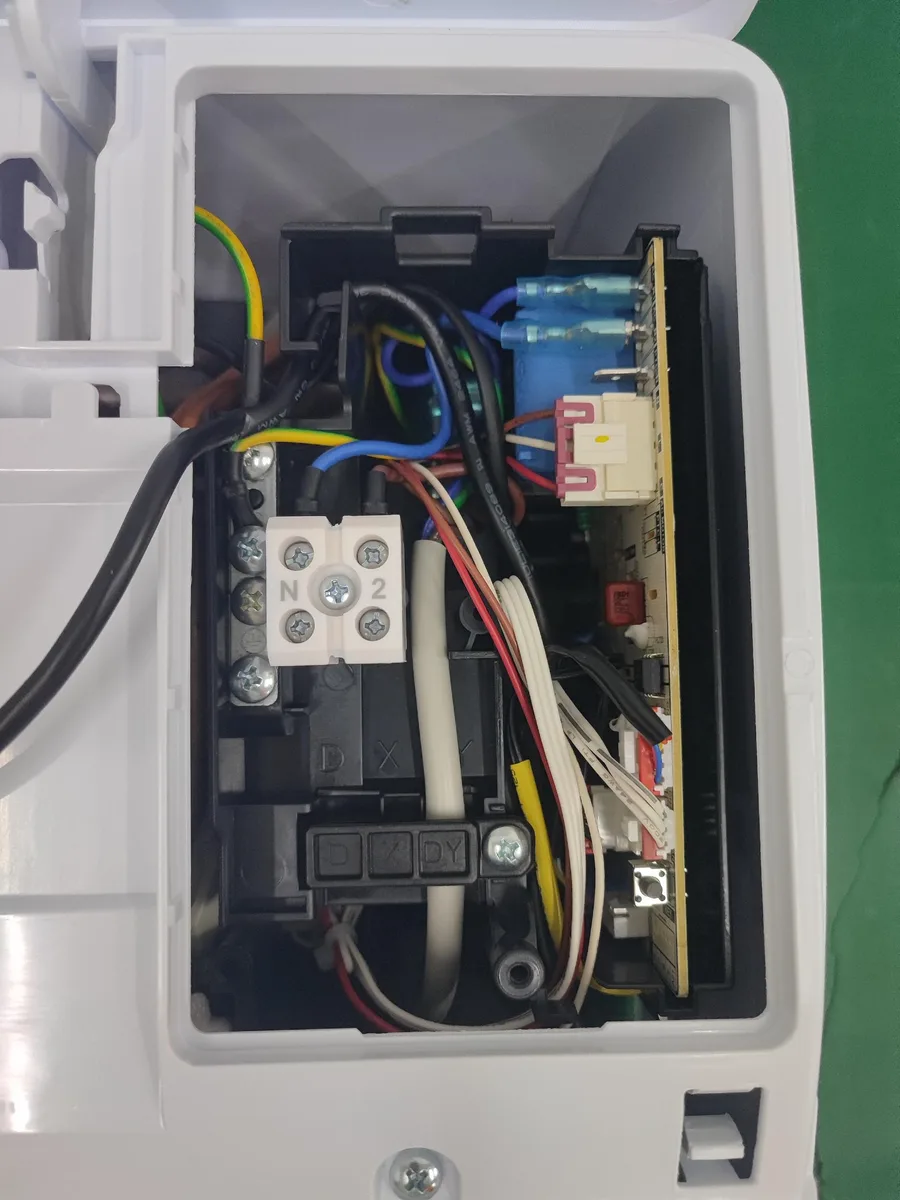
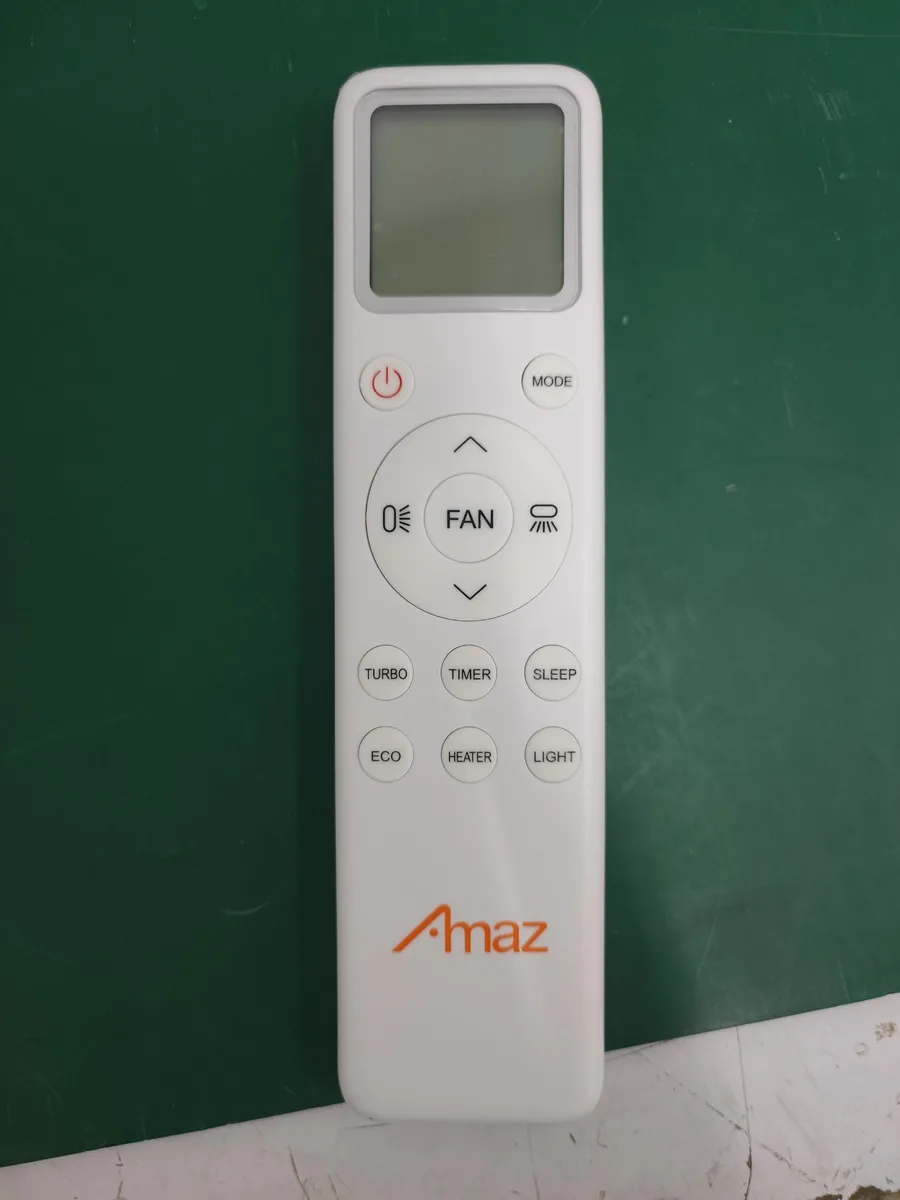
A photograph can help identify a remote or compartment layout, but it cannot confirm interchangeable electronics or supported functions. Match parts and controls to the approved bill of materials. Any electrical access or live testing belongs to qualified personnel following the product instructions.
6. Compare the complete order scope, including accessories and packing
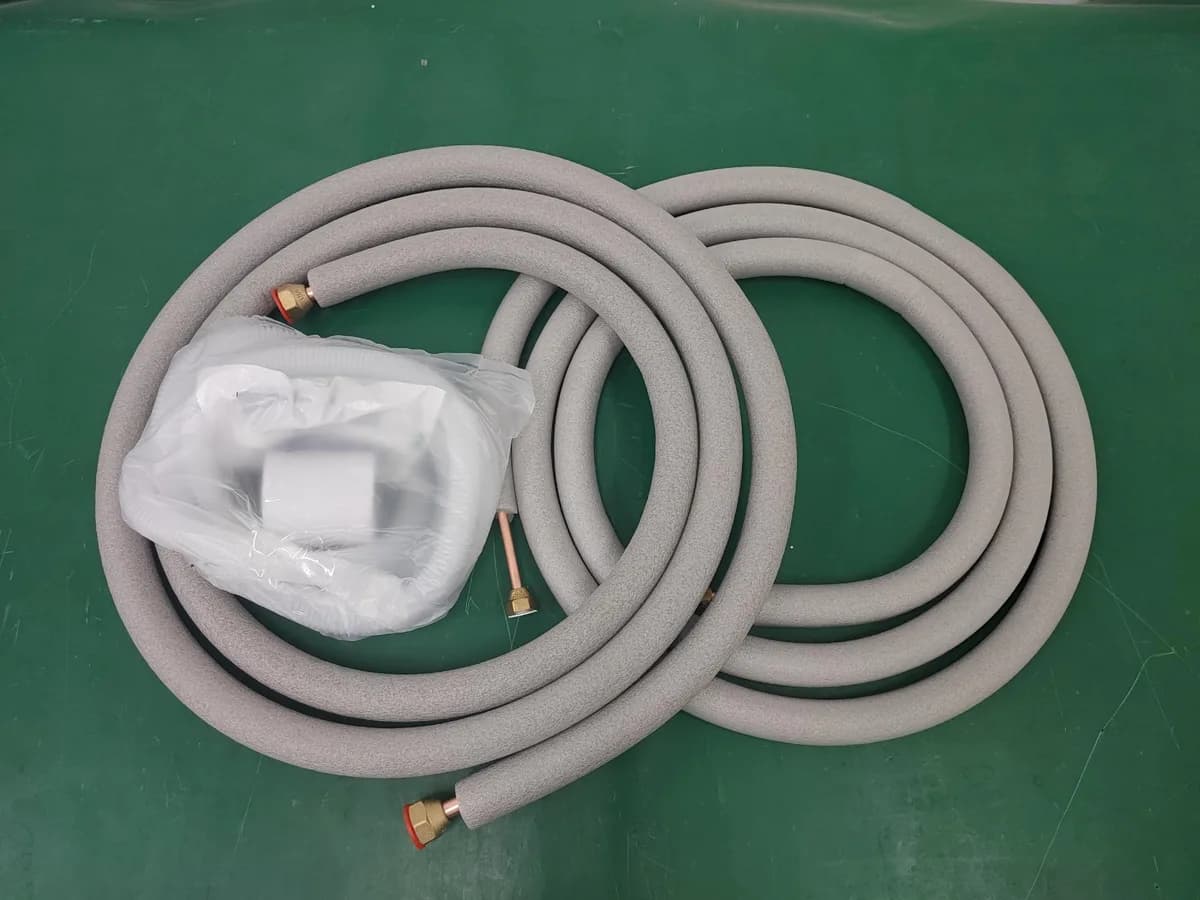
A useful inverter AC wholesale comparison includes the same scope of supply on both sides. State whether pipe kits, insulation, drainage materials, cables, mounting items, batteries and translated manuals are included, optional or excluded. Check each item rather than assuming a complete installation package.
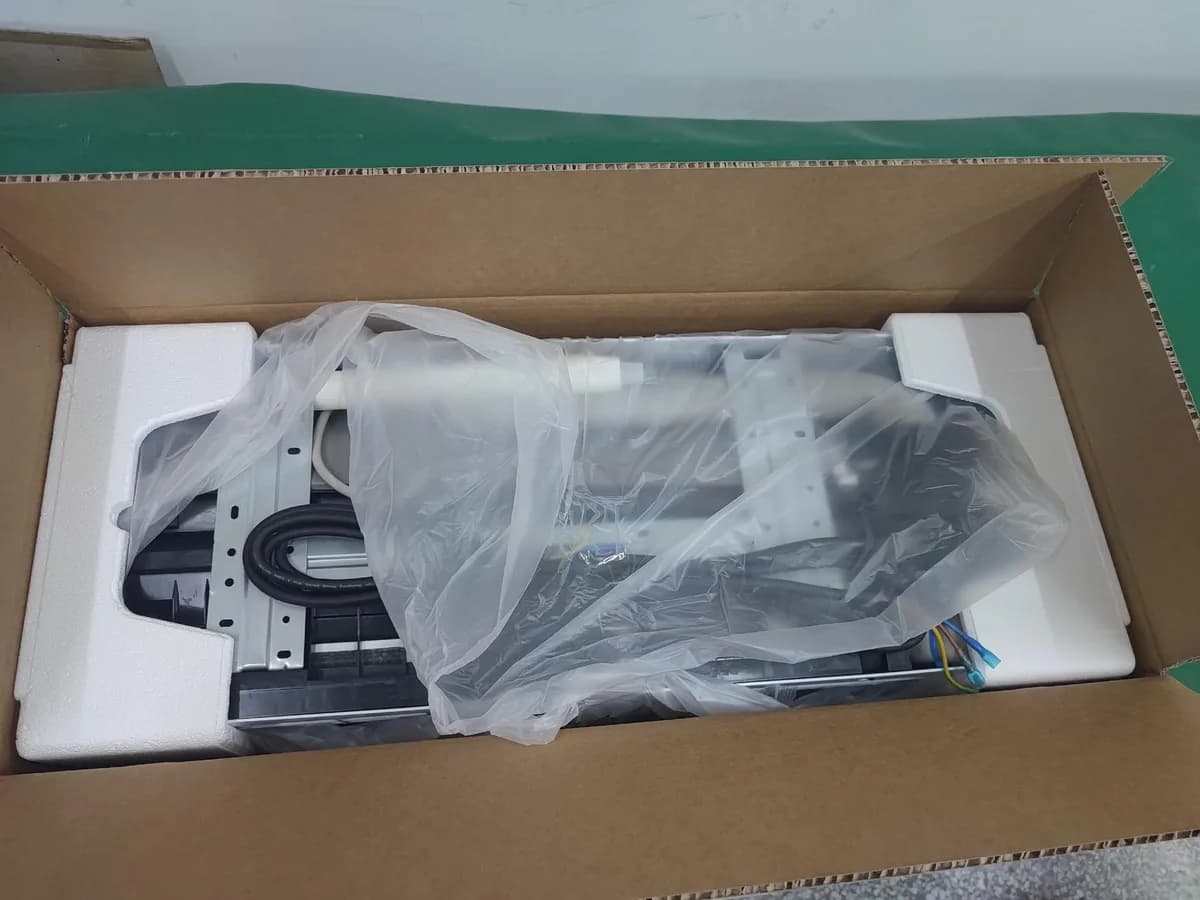
Request confirmed packing dimensions, weights, indoor and outdoor carton quantities, and loading information for the selected configuration. Reconcile sets and individual cartons. Do not transfer a container quantity from one model or packing revision to another.
Compare payment terms, trade terms, document responsibilities and offer validity using the supplier quotation comparison guide. Product-page reference prices can support an initial discussion; the order needs a current quotation against the selected specification.
7. Decide whether to stock inverter, fixed-speed or both
Request parallel offers when the channel needs a clear choice between two configurations. Keep capacity, climate class, functions and supplied accessories aligned, then assess the documented performance and total order scope against the channel’s priorities.
An inverter range can be evaluated for buyers asking for documented efficiency features. A fixed-speed range can be evaluated where that configuration meets the buyer’s specification and price position. These are selection criteria, not claims that one type always costs less, lasts longer or suits a whole country.
For a mixed range, define the capacity mix, product naming, labels, manuals and parts references so that sales and support teams can distinguish the configurations. Confirm production and packing arrangements for the proposed mix before agreeing quantities.
8. Send a comparable RFQ and define acceptance records
Use the split AC sourcing checklist to prepare the specification. Request separate quotations for inverter and fixed-speed alternatives against that same brief.
Agree sample approval, label artwork, functional checks and records before production. The air conditioner pre-shipment inspection checklist helps turn the approved configuration into a shipment review. For report scope, use the product-document verification guide.
- Destination and intended sales channel
- Inverter, fixed-speed or parallel alternatives
- Capacity mix, climate class and operating modes
- Voltage, frequency and any backup-power requirement
- Required performance and market documents
- Accessory and packing scope
- Estimated quantity, delivery requirement and commercial basis
Discuss your inverter and fixed-speed AC requirements with AMAZ
Review the available air conditioner designs and market configurations and product catalogues. The AL661 page is an exterior-design reference; its technical pairing must be confirmed for your order.
Send your destination, capacity mix, preferred control type and estimated quantity. Contact AMAZ for an order-specific configuration discussion and request the current specification, available evidence and quotation.
Inverter and non-inverter AC buying questions
Can I identify inverter AC from the indoor panel?
No. Confirm the technical model, compressor control type and matched indoor–outdoor combination in the approved documents.
Does inverter AC always save a fixed percentage of electricity?
No universal percentage follows from the control type. Use model-specific test evidence and explicit operating assumptions for any estimate.
Does inverter mean T3, heating or generator compatibility?
These are separate requirements. Confirm climate classification, operating modes and supply compatibility for the exact configuration.
Which type should an importer stock?
Compare equivalent configurations against the channel’s performance requirements, price position and support resources. A mixed range may be considered when its model and parts distinctions are clearly defined.
Are the pipe kit and remote included in both quotations?
Only if the written scope says so. Confirm contents, compatible references, dimensions and quantities separately for each offer.
What should I send to request an inverter or fixed-speed quote?
Provide destination, capacity mix, control type, climate and electrical requirements, estimated quantity, documents, accessories and packing scope.