
R32 vs R410A Air Conditioners: What Importers Should Compare Before Ordering
An R32 vs R410A air conditioner comparison should help an importer select a complete, documented system for a destination market. Refrigerant choice affects the questions to ask about market requirements, installation, service support and the specification being quoted. R32 has a lower global warming potential than R410A on the comparison basis below. That is one selection factor. Buyers also need model-specific performance data, an approved indoor–outdoor combination and a practical support plan before placing a wholesale order.
1. Start with a clear R32 and R410A comparison table
Use the refrigerant designation, comparison basis and safety group as separate fields. The Australian environment department’s refrigerant reference provides the composition and AR4-based values used here.
The ASHRAE reference table distinguishes AR4, AR5 and AR6 figures. This comparison uses AR4 consistently. When a regulation, report or customer specification uses another basis, identify it explicitly before comparing values.
Safety groups have defined meanings. A1 denotes lower toxicity and no flame propagation under the classification test conditions; A2L denotes lower toxicity with lower flammability and low burning velocity. The European Commission’s safety-group overview explains the distinction. These classifications do not replace the selected equipment’s instructions.
| Comparison field | R32 | R410A | Importer action |
|---|---|---|---|
| Refrigerant type | Single-component HFC | HFC blend: 50% R32 and 50% R125 by mass | Confirm the specified refrigerant for the complete system |
| 100-year GWP, IPCC AR4 basis | 675 | 2,088 | Record the assessment basis used in each document |
| Refrigerant safety group | A2L | A1 | Review the applicable installation and handling requirements |
| Cooling capacity and efficiency | Depend on the selected system | Depend on the selected system | Request comparable data for the exact unit pair |
| Factory charge | Confirm for the selected combination | Confirm for the selected combination | Request the model-specific charge and corresponding documents |
| Commercial suitability | Confirm market, service support and supply | Confirm market, service support and supply | Compare current offers with equivalent supply scope |
2. Check the destination requirements before comparing prices
Ask the importer’s local compliance contact or qualified adviser which requirements apply to the proposed equipment, destination and planned market-entry date. Provide the exact product category, capacity, refrigerant, charge and unit combination so the review concerns the product being ordered.
For example, the European Commission’s air-conditioning guidance distinguishes equipment categories and dates. Use the responsible authority’s requirements for your own destination and confirm any necessary product documents, registration or importer obligations.
Request the document scope during quotation: model identities, issuing body, reference, revision and relevance to the destination. A refrigerant name or a mark visible in a product photo does not establish market acceptance.
3. Compare whole-system performance under equivalent conditions
Lower refrigerant GWP does not, by itself, establish a lower electricity bill. Ask for cooling capacity, electrical input and efficiency information for each complete system under stated conditions.
Use the same efficiency metric and note whether the figure describes a rating point or a seasonal assessment. Confirm the test method, operating mode, supply and indoor–outdoor pair. Two offers with the same nominal BTU capacity may still represent different configurations.
Keep refrigerant choice separate from inverter control and T1/T3 climate requirements. The inverter comparison guide and T1 vs T3 sourcing guide cover those additional selection decisions. Assess them together in the final specification without treating one label as proof of another capability.
If performance information is missing, ask the supplier what documented data or agreed testing can be provided. Avoid assigning a general energy-saving percentage to all R32 or all R410A air conditioners.
4. Confirm local installation and service readiness
Discuss the proposed system with the installation and service organisation that will support it in the destination market. Ask them to review the manufacturer’s instructions, applicable safety requirements and any equipment-specific limits relevant to the intended installations.
Confirm the availability of appropriately trained personnel, suitable tools, approved service information and a route for replacement parts. Include required manual languages and technical support responsibilities in the purchasing brief.
For R32 equipment, the A2L classification belongs in that review. R410A equipment also requires its own approved procedures and qualified handling. Neither refrigerant designation removes the need to assess the complete system and its intended use.
This is a procurement check: request the required preparation and supporting documents before committing to the order.
5. Approve the matched units, refrigerant and rating information together
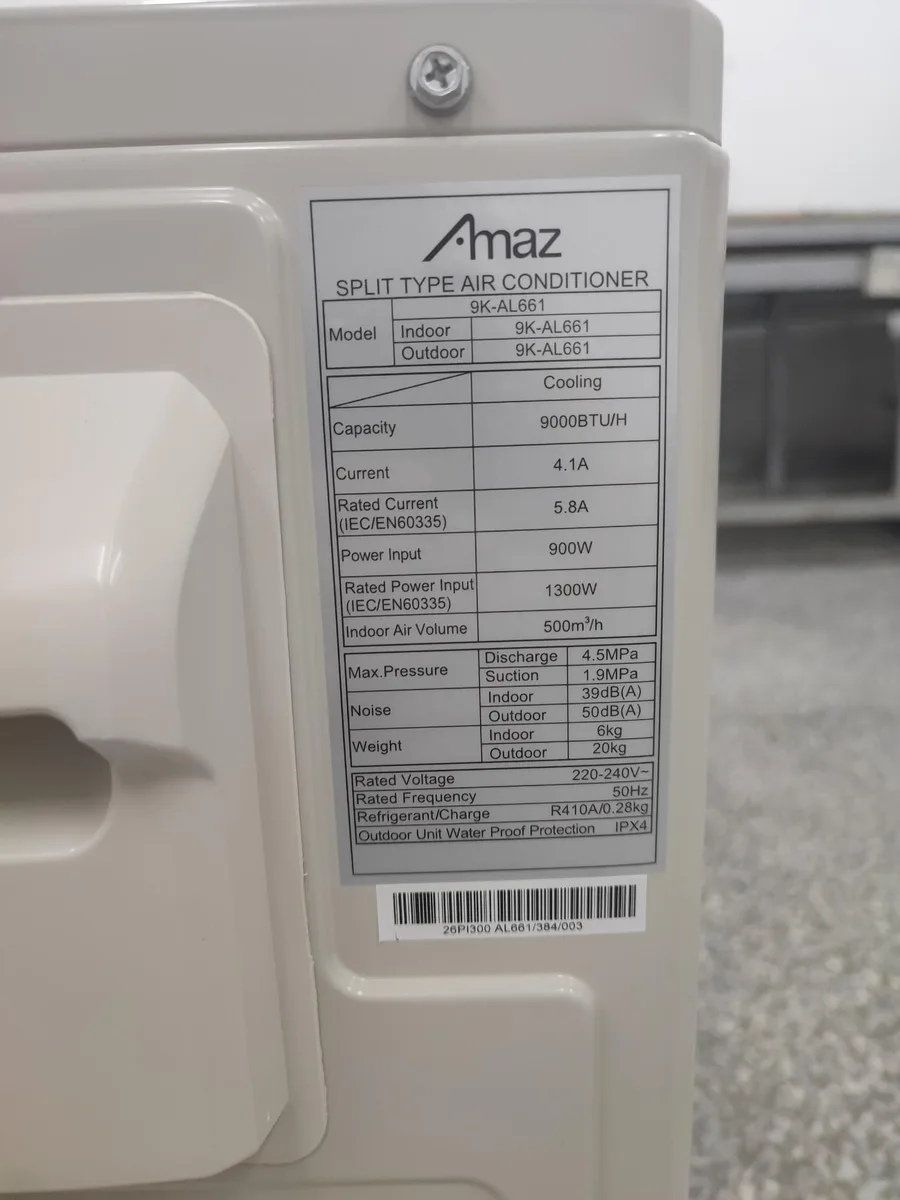
Record the approved indoor and outdoor codes and the specification revision. Request clear photographs of both rating labels, then compare them with the quotation and technical sheet. Confirm where the refrigerant designation and charge are stated for the complete system.
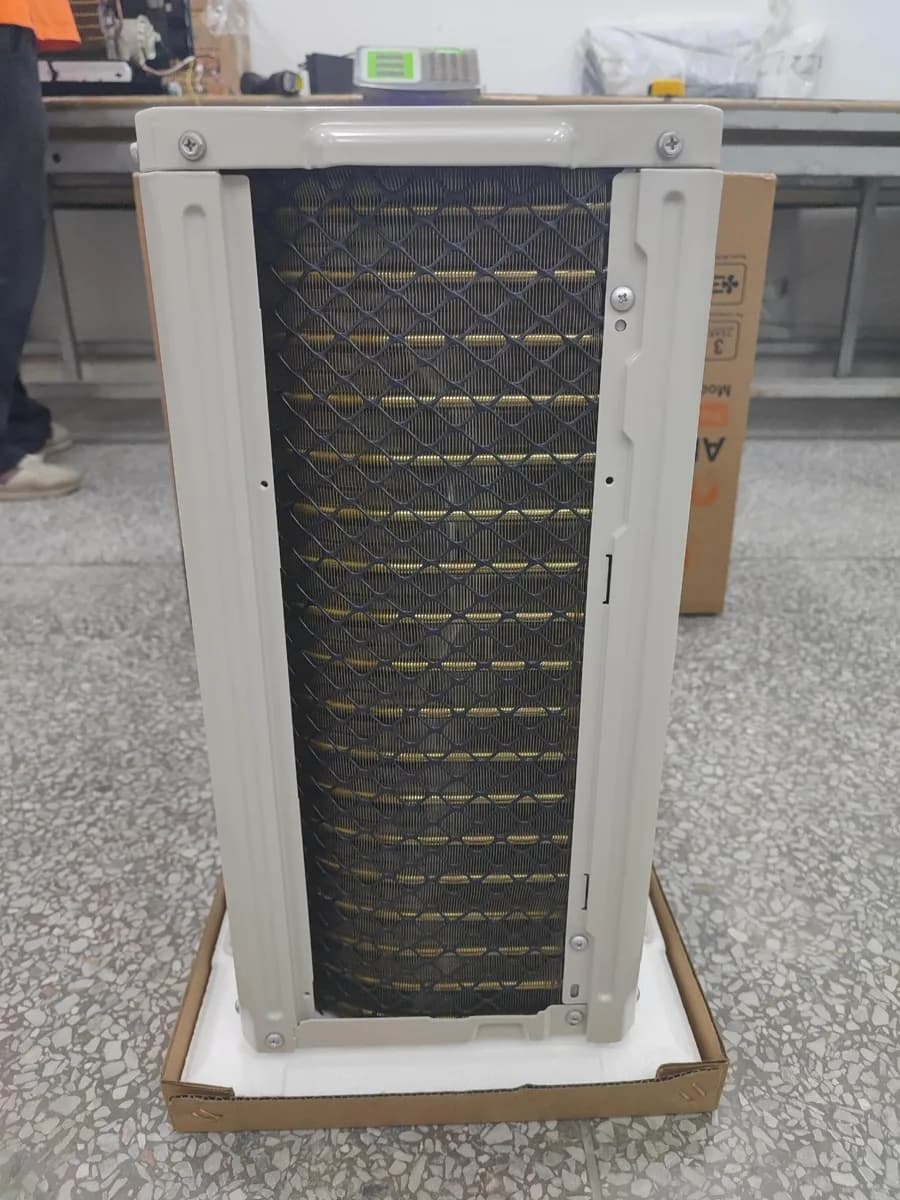
An exterior design may be offered with different technical configurations. A similar cabinet, matching nominal capacity or repeated sales code is not enough to establish that units are interchangeable. Any proposed alternative needs the manufacturer’s documented approval for the combination.
Keep electrical supply as a separate approval field. The 50Hz vs 60Hz importer guide explains why voltage alone is incomplete. Use the pre-shipment inspection checklist to agree identification checks and records.
6. Include shipping, packing and support scope in the quotation
Give the forwarder the exact equipment and refrigerant information. Ask what shipment classification, documents and carrier conditions apply to that consignment. Obtain any required manufacturer documents and keep them consistent with the goods being supplied.
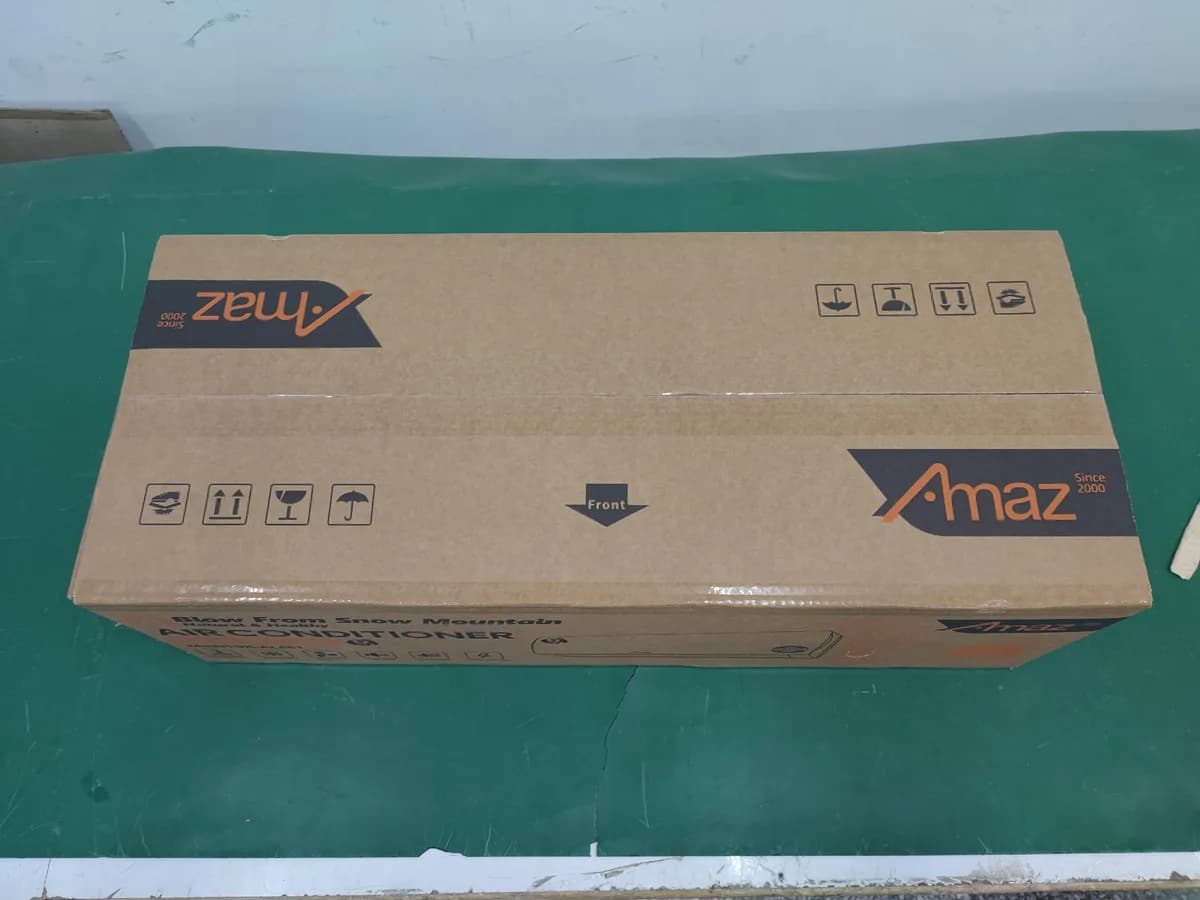
Compare accessory scope, packing method, carton identification and parts support as well as unit price. In a mixed order, ask how capacities and technical variants will be identified and reconciled as complete sets.
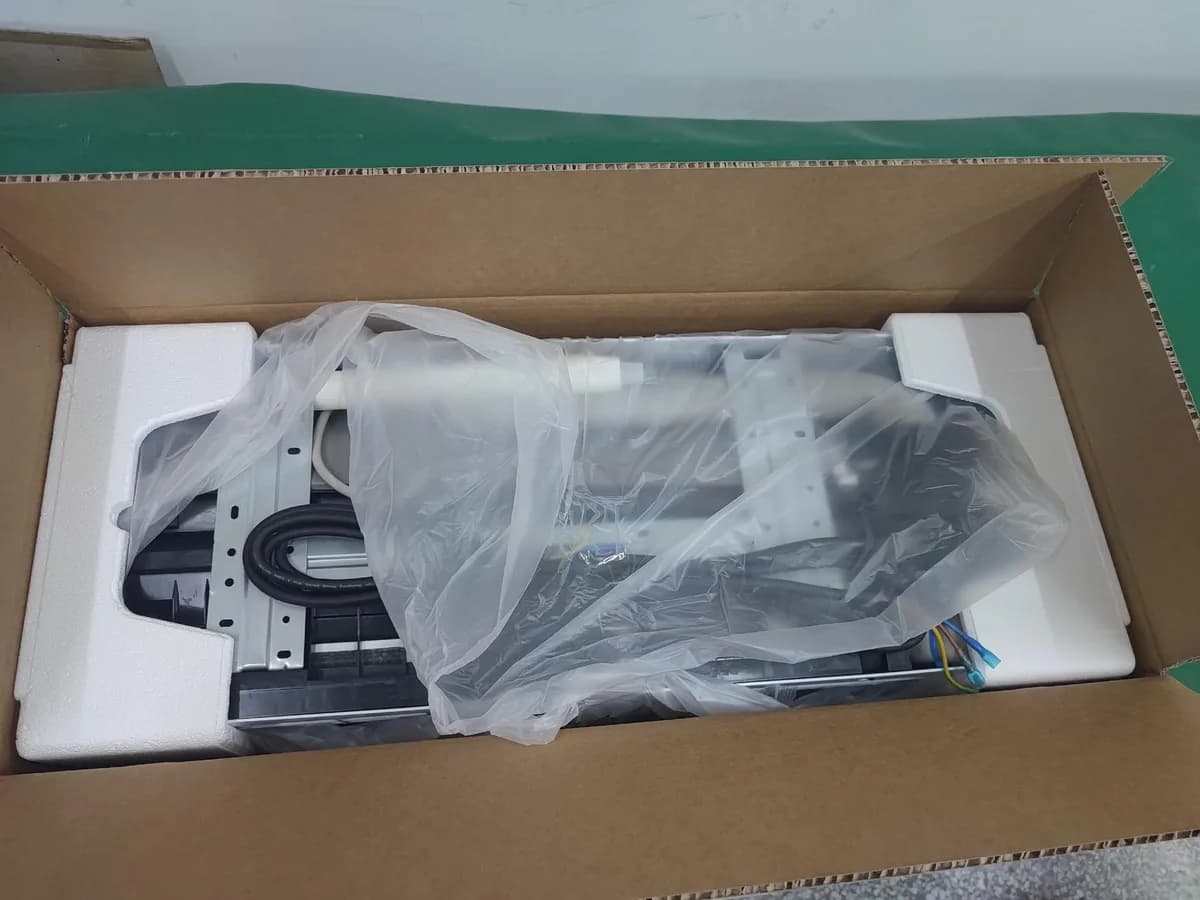
Request a loading proposal based on the selected configurations and final packing. The 40HQ loading guide covers the distinction between reference quantities and a shipment-specific plan. Neither a loading photo nor a refrigerant designation establishes a universal freight rate.
7. Send an RFQ that suppliers can answer consistently
Ask the supplier to identify which items are confirmed and which require further review. The split AC sourcing checklist provides the wider order-preparation framework.
Use one brief for the alternatives under consideration:
- Destination country, delivery location and intended sales channel or project.
- Capacity mix, quantity and preferred indoor–outdoor combination.
- Required refrigerant and the information needed to assess an alternative.
- Voltage, frequency, phase, operating modes and climate requirements.
- Model-specific capacity, input and efficiency evidence with the test basis.
- Refrigerant designation, factory charge, labels and installation documents.
- Destination documentation, inspection and shipment requirements.
- Accessories, packing, manuals, spare parts and support responsibilities.
- Requested trade terms, delivery schedule and quotation validity.
Discuss documented air conditioner configurations with AMAZ
The current AMAZ air conditioner product table lists R410A configurations. One reference is AL12000A, 12,000 BTU, in the West Africa except Guinea group: T1 fixed-speed, cooling only, 220V/50Hz and R410A. Confirm the current technical specification and chosen exterior together for an enquiry.
R32 supply and model availability require separate confirmation. A refrigerant comparison is not an offer of an unconfirmed model.
Browse the product catalogues, then contact AMAZ or request a quotation with your destination, capacity mix, required refrigerant and estimated quantity.
Frequently asked questions
Does R32’s lower GWP mean every R32 air conditioner uses less electricity?
No. GWP describes the refrigerant’s climate effect on a stated basis. Compare the complete systems’ capacity, input and efficiency under equivalent conditions to evaluate electricity use.
Why do some documents show different GWP numbers?
Figures can use different assessment bases or reporting conventions. Identify the source, time horizon and basis required by the document or applicable rule before comparing them.
Is R410A acceptable in every destination market?
Do not make a worldwide assumption. Confirm the jurisdiction, equipment category, refrigerant charge, relevant date and required documents for the proposed order.
Can I approve an R32 alternative while keeping the original unit pairing?
Request manufacturer approval and the corresponding specification for the exact alternative combination. Shared appearance or capacity does not establish interchangeability.
Which option is cheaper to import?
Compare current quotations covering equivalent capacity, documents, accessories, packing, shipping and support. This guide does not establish a fixed price difference.
Does AMAZ currently offer an R32 split AC model?
R32 model availability has not been confirmed for this guide. The current public product references used here list R410A; send your requirements for model-specific confirmation.